Blown Away

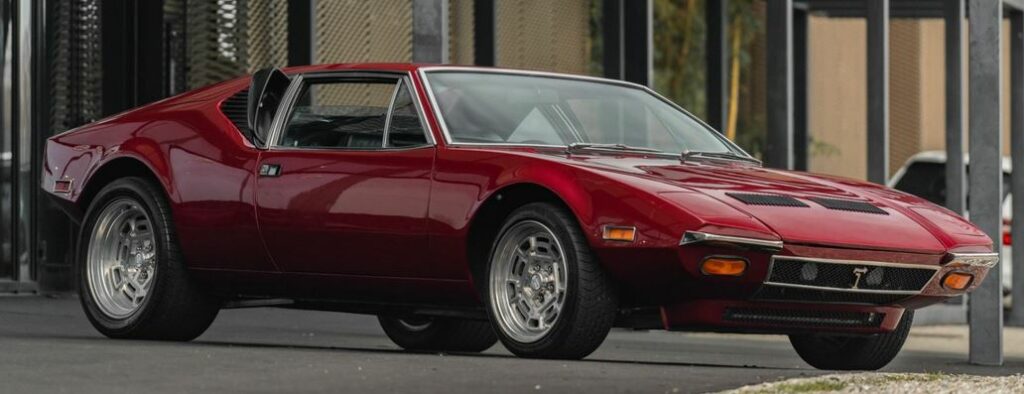
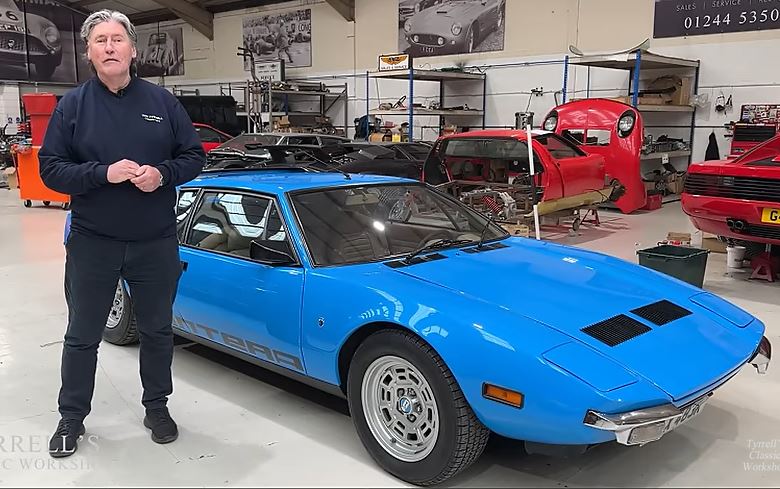
You have to know that if you can impress Iain Tyrell with a 1970s-era car, you’ve achieved something.  As always with Mr. Tyrell, his history and styling/engineering overviews alone are worth the price of admission.  Go ahead and watch the video now.

And if after seeing Iain’s reaction to driving it you want to look at the Pantera for yourself, feel free to browse the market

I’ve always loved them, but I have to say that I doubt whether I’d be able to fit inside one.  Man, they are tiny.

But still… who cares about stuff like personal comfort when you’re driving pure power and self-indulgence?

About Those Duracell Cars

Seems like every day there’s something new to post about this nonsense.  Here’s the first:

Labour will bow to pressure from car manufacturers and rethink strict rules on the sales of electric vehicles.  Downing Street today confirmed ministers will launch a consultation on current plans following intense lobbying by firms.

Under an existing Government mandate, at least 22 per cent of new cars sold by every manufacturer in the UK this year must be zero-emission vehicles (ZEV).  The mandate is set to increase to 28 per cent next year and will rise each year over the next decade – reaching 80 per cent in 2030 and 100 per cent in 2035.  This is when there will be a ban on the sale of all new non-zero-emission cars as part of the Government’s Net Zero commitments. 

Carmakers are set to be fined £15,000 per polluting car sold above the limits.

But firms have been warning ministers that the ZEV mandate is putting jobs and investment at risk in the UK.

Government mandate, meet market reality.  Mind you, not that any kind of reality has ever been part of governmental wishful thinking (e.g. gun regulation).

And then there’s this:

Germany has joined a growing backlash against fining car makers who miss net zero targets – suggesting the firms should be allowed to keep the money to invest in cutting emissions.  Chancellor Olaf Scholz has hit out at the European Union’s zero emission vehicle plans, which require manufacturers to reduce the emissions from their new cars and vans by 15 per cent compared to 2021 levels by next year.

The quickest way for firms to do this is to reduce the production of petrol and diesel cars and encourage people to swap to electric vehicles – but firms say motorists aren’t biting and warn jobs could be at risk if UK and EU mandates aren’t eased.

However, it will be the car firms that face penalties if they fail to shift enough battery electric vehicles (BEVs) and plug-in hybrid electric vehicles (PHEVs) to hit the 15 per cent target.

This grows to a 55 per cent reduction in car emissions and 50 per cent vans by 2030. EU autocrats then want a 100 per cent reduction – i.e. no purely fossil fuelled cars and vans sold at all – by 2035.

Germany has a vested interest in protecting car firms from fines: its car industry is solely responsible for an estimated five per cent of GDP, and is home to huge names including Audi, BMW, Volkswagen and Mercedes-Benz.

Yeah, rules and fines are all very well, as long as there’s no economic damage — or so one would think.  Except, of course, that governments of the Leftist ilk seldom seem to care about consequences, because as we all know, Leftism requires only that policy is based on good intentions, and the consequences thereof are irrelevant.

At some point — and in this regard, for once, the U.S. seems to have tumbled to this before the others — voters are going to cry “Enough!” to this insanity.  And nowhere is this becoming more evident than in the auto industry.

Times are becoming more and more interesting, nicht wahr?

Might As Well

I’ve sounded off before about the stupid management of Jaguar, who’ve turned what must be the most iconic British car company into some kind of purveyor of microwave ovens by going all-electric.  So their latest move comes as no surprise:

Jaguar has ditched its teeth-baring big cat logo as part of a radical electric rebrand that it concedes won’t appeal to the majority of its traditional customers.

The ‘growler’ logo, the universally-recognized snarling Jaguar head badge used for decades on the grilles and bonnets of iconic cars including the E-Type, has fallen victim to a revamping of the firm’s style and identity as it seeks out younger, wealthier and more diverse customers for its next generation of expensive EVs.

Yeah well, who cares, seeing as the latest product offerings from Jaguar bear only the slightest resemblance to any cars at all, looking more like vacuum cleaners and Lego toys anyway.

And this supercilious fuck-you statement typifies their entire attitude towards their market:

Highlighting that 800 people had worked on the radical redesign and re-branding, Jaguar design chief Gerry McGovern jokingly promised: ‘We have not been sniffing the white stuff.’

Fucking plonker.

Just a reminder of the heritage they’ve thrown away:

I sincerely hope that they go out of business — and who would have thought that I, of all people, would ever say that about Jaguar?

A pox on them.

That Van Thing

From Reader Garry K.:

Kim, in your recent rant against minivans on your Splendid Isolation blog (“No It Isn’t“, November 18, 2024), I wonder why you have so much hatred against such vehicles?

When you played gigs, how did you get your gear to the gigs? Did you pile all of your gear (amp head, speaker bottom, guitar case, maybe a PA system, mic stands, etc) into a tiny 2-seater sports car? I’ll bet not! To me, such 2-seater “sports” cars are totally useless. Give me a minivan any day, as I HAVE used my minivans to haul musical gear to gigs, to go camping, to haul a bunch of folks to carpool to events, etc.

When I used to gig, I had a 1974 VW “Panel Van” (bought new) that looked something like this, except in a sort of pale bamboo yellow, with the same hinged side doors (rather than a single sliding one):
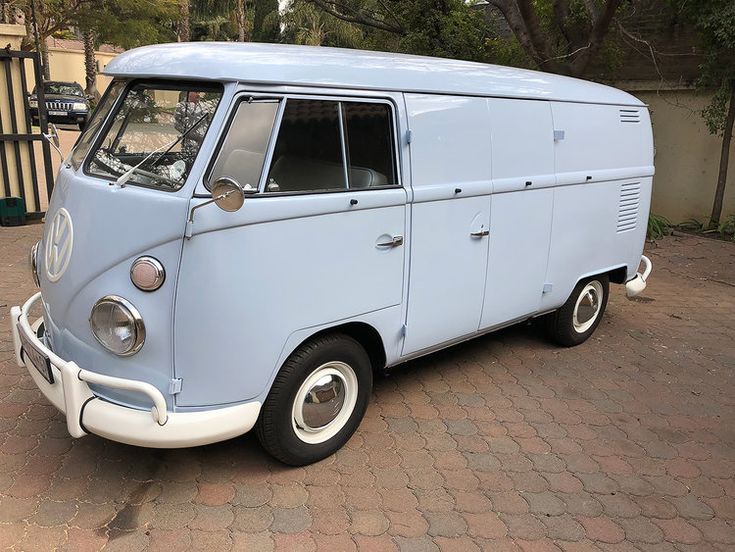
Basically, VW Brazil realized that poor people needed basic transportation, so they set up a production line to re-create the 1964 model, only with modern 1600cc engines.  To say that the interior was spartan is to make Spartan look Byzantine.
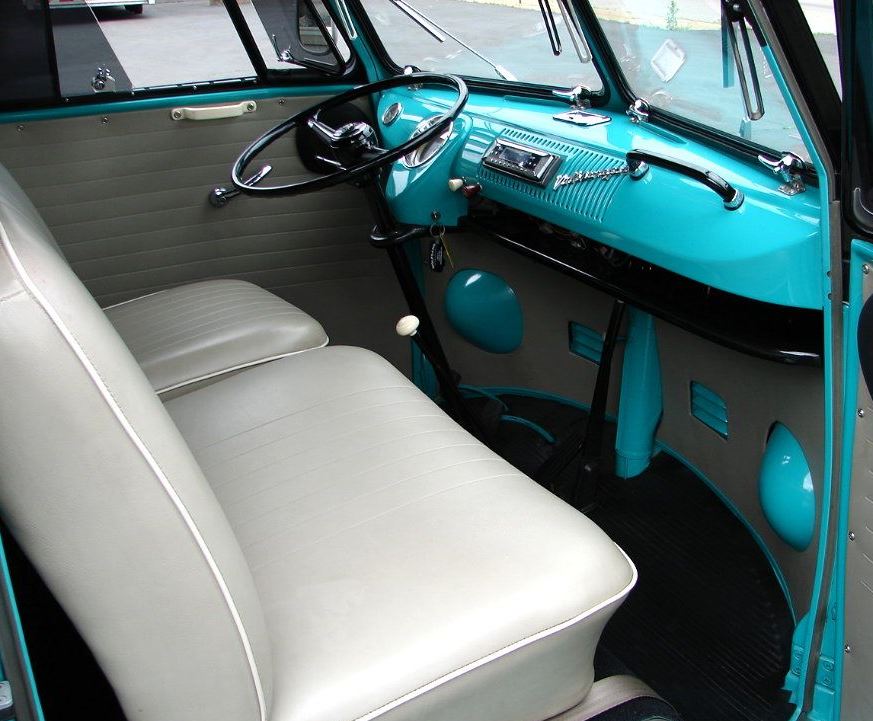

…except of course that mine had no radio, no snazzy “Volkswagen” chrome logo, and certainly no way to open the windshield.  Talk about frivolous.

The model was so popular that VW South Africa started to import them — and even with an import duty of 100% (!!), the cars cost, in today’s  Bidenflation dollars, the equivalent of about $6,500 (ZAR950, back then).  Brand new.

I drove “Fred” for about eight years, and put close to 200,000 miles on the odometer.  Horribly abused and always overloaded, it only needed a new clutch at 85,000 miles (along with the usual perishables like tires and so on).

They were so popular in South Africa that VW stopped importing them after only a few years because these plain-Jane vans were eating their lunch, with little profit withal, and VW couldn’t move their “regular” vans (which had unnecessary luxury geegaws like sliding doors, disc brakes, seatbelts, a curved single-piece windshield and automatic transmission).

And that was with the band back in Seffrica.  When the kids came along in the U.S., I did the full station wagon / minibus thing:  several minivans, SUVs and a Chev Suburban, before moving on to SUVs like the Kia Sportage and then a couple of Tiguans such as I drive today.

But to return to Reader Garry’s point:  it’s not a question of hating minivans.  It’s just that I never had a chance to drive a two-seater sports car as my own personal vehicle.  In fact, the sportiest car I ever “owned” (company car) was an early-model 2-door BMW 318i with a 5-speed stick shift, which I loved with a passion.

In other words, I never had a chance to indulge myself, whether in my yoot because I had to schlep a band’s worth of gear, or as an adult because of kids.

And now, in my later years, I’d love to own an impractical 2-seater, just about any 2-seater, but it seems unlikely that I’ll ever get to do so.  It’s therefore with great longing that I talk about sports cars as much as I do;  in the cold harsh light of day, though, they’re my unreachable dream.

What I do know is that if I were to win the Powerball, I’d own at least three, out of pure self-indulgence — because I’ve been the responsible one all my life, and I’d like to be irresponsible just once.

Just don’t ask me which three, because I’ll talk about them some other time.

No It Isn’t

Here’s a new one:

On what planet are these people living?  (And I mean BOTH the manufacturer AND the person who wrote this review / headline.)

Let me start out with a basic premise:  minivans are not luxury vehicles.  (And I speak as someone who has owned… lemme see… three of the fucking things.)

They’re commonly referred to by various terms:  soccer-mom limos, kid-carriers, and the like.  They are not status symbols — which is what premium cars are — unless they are SUVs like Range Rovers, which at least have the capability (but very seldom the opportunity) to go offroad.  And an SUV isn’t a minivan, anyway.  Minivans — the term, even — have only two basic requirements:  hold a lot of passengers (the “van” part), and be economic and reliable, because gawd knows the sturm und drang  that follows Junior missing his important soccer tournament or Missy her ballet performance just because Mom Shuttle failed.

And for many years, minivans followed that formula, and everyone was happy.  Few people remember this, but Chrysler’s Plymouth (!) Voyager was by far the most popular thing on the lot — the company couldn’t make them quickly enough — and under the dictionary heading of “basic transportation” in any dictionary was a picture of the horrible thing:

And for those who don’t remember or weren’t in the target market, I recall that the Voyager’s basic model offered brakes and/or suspension as an optional extra.  “Basic”, they were, in spades.

For a young start-up family with their 2.7 kids (plus all the other members of the soccer team / Boy/Girl Scout troop / ballet company), the minivan was just the business, because it fitted their basic requirements without having to sell their kids to Jeffrey Epstein just to afford the down payment.

Of course, young families in the minivan target segment now consist of no Dad, a Mom and 0.27 kids (that modern-day demographics thing), which makes the actual need for a large passenger capacity irrelevant.  Moreover, thanks to Net Zero and Bidenomics (it’s with us still), mothers are often having to choose between one basic need over another because having both is economically unfeasible.  Let me go out on a limb here and say that a $115,000 minivan is not a serious option for them.

And there are only a few billionaire’s wives who might consider buying one of the above, and even then if they want to move their kids around, there are Range Rovers and Maybach (both around $200k !) SUVs that would a) fill the status quotient and b) actually carry more than a few kids besides.  Just not in the U.S. or U.K.

Sold only in China, the EM90 is designed for rear-seat passengers who have outgrown juice boxes but still rely on others to clean up their messes. Second-row captain’s chairs that look like they were sourced from Airbus’ business-class catalog transform the humble family wagon into a private jet for the road. Anyone headed to soccer practice in an EM90 likely owns the team and the stadium they play in.

Maybe there are lots of very affluent soccer moms in China, who knows?  And forgive me, but sub-Gen Z brats neither need nor deserve “business class” seats, either.  Fucking hell, what a shit show.

Finally, Volvo’s management (assuming they have one and don’t just make their decisions based on throwing multi-sided game dice) have been idiotic for some time, ever since they tossed the plain-‘n-simple 240D station wagon (remember them?) for more upmarket models (most of which failed despite being quite decent cars).  Volvo was then one of the first manufacturers to go “all electric, all the time” which has met with such resounding success.  (Ask Volkswagen, who are similarly brain-dead.)

Who knows?  I may be wrong and soccer moms everywhere will be lining up at Volvo dealerships to buy the stupid things for $115 thousand dollars apiece, but I doubt it.  The fact that the EM90 won’t be sold in the U.S. is a telling point.