
Pedro

Back in 2004, one of our training trips took us to Chile.  We’d just come back from two weeks in Germany/Austria, and only a few days later saw us in the skies again, this time towards South America.  None of us had ever been there before, so we looked forward to the chance keenly.

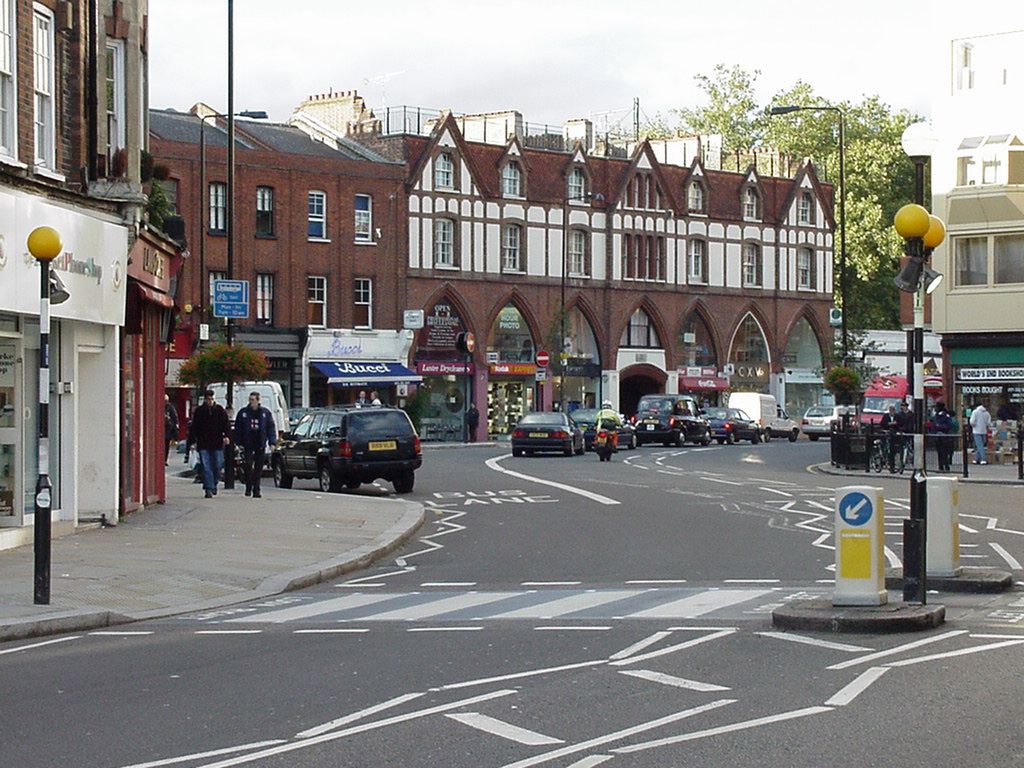
Santiago was nice, but the job kept us very busy, and I was only able to spend one day downtown with the kids, but whatever — we loved it and all said they’d be happy to return someday.

Then we added on a few days in Viña Del Mar, just over the river from Valparaiso, and that place we really loved.

Climate-wise, we were just heading into winter — May in the southern hemisphere — but that meant only light coats and sweaters, so we set about exploring Viña on foot.

What a lovely place.

One of the things we noticed about Viña was the plethora of stray dogs.  Coming from the Land Of The Free (and most recently from Yurp) where all dogs are on leashes or indoors, this was a strange sight.  There were scores, maybe even hundreds of dogs wandering about in the streets, some in groups/packs, others on their own.  None of them gave any sign of being dangerous, so we just did what everyone else in Viña did, and ignored them.

On our third day there, however, one dog attached himself to us.  He was a tan puppy of (duh) indiscriminate ancestry, and he trotted along with our little group, stopping when we stopped to window-shop or take pictures, then resuming the trip when we started walking again.

He was as cute as hell, and the kids named him Pedro.  They would have petted him, except that Dad threatened them with death if they did so, because I sure as hell was not going to deal with the inevitable flea infestation that ensued.

After while, he would dart ahead of us towards the next street corner.  The first time caused us a little panic because we thought he would run out into the street and get run over by a car, but Pedro was streetwise:  he’d stop and sit at the edge of the sidewalk, glancing back over his shoulder, waiting for us to catch up.  Then he’d walk across the street with us, his street smarts obviously telling him that he’d be safe with us.

Anyway, we got to the street that ran along the beach, and eventually we came upon a fishing pier that stuck out into the bay.  Halfway along the pier was a hamburger stand and a long queue of people waiting to get served.  (I know, Third World street food is muy peligroso, but the number of people reassured us.)  So we got our burgers, and good grief they were among the best burgers we’d ever eaten, anywhere in the world (not to mention costing us only about 75c each).  It was also the first time I’d encountered fresh avocado used as a spread on a hamburger bun… delicious.

So of course I had to get a burger for Pedro.  What astonished all of us was that he didn’t snatch the food away, but took it gently from my hand and then lay under our table to eat it.  He didn’t gulp it all down either, but ate it like a human:  tearing off mouthfuls one at a time, eating slowly — much slower than my ravenous kids, come to think of it — and when I tossed him a few of the thick, wonderful fries, he ate them in similar fashion.

Anyway, we made our way back to the hotel, but Pedro got a shock because when he tried to follow us in the entrance, the doorman shooed him away, gently but firmly.

I will never forget the look of disappointment and sorrow on Pedro’s face.

He wasn’t waiting for us outside when we went out the next day, and as we walked around, we all kept looking for him, but he’d vanished;  and every one of us was devastated.

The day after that we got in the car and drove up the coast.  I’m pretty sure that had Pedro showed up and asked, we would have welcomed him, fleas and all, into the car for the trip.

We never saw him again.

Modern Take

In Orwell’s Animal Farm, the pigs’ chant changed from “Four legs good, two legs bad!”  into “Four legs good, two legs better!”  and the farm changed forever.

Well, when it comes to airliners, it seems that the latter has become the norm — just substitute “engines” for “legs”, and you get the picture.

Modern engines, we are told, are more efficient and more eco-friendly (in that they burn less fuel and therefore squirt much less of that eeeevil carbon-whatever into the atmosphere), so therefore twin-engined long-haul aircraft are so much more desirable, you see, than those fat and dirty old 707s and 747s.

Amazingly, the oh-so eco-friendly Germans don’t agree (albeit for the wrong reasons), and are keeping some of their 747s:

This four-engine behemoth, first flown commercially in 1970, is no longer financially viable in an era of increasingly-efficient twin-engined jets. The final passenger-configured jumbo was delivered eight years ago, and Boeing has no plans to restart the production line.

But one European airline hasn’t turned its back on the 747 just yet. Germany’s Lufthansa, perceived by many to be aviation’s kings of efficiency, still operates 27 jumbo jets – 19 of the newer 747-8s, and eight older, slightly smaller 747-400s – and is even upgrading some jumbo jet interiors with swanky new Allegris seats as part of a £2bn Lufthansa fleet-wide refit. 

Here’s the reason:

Why the lingering attachment? Part of the reason is simple and unromantic economics. According to aviation analysts, operations out of its Frankfurt and Munich hubs are each at take-off slot capacity.

So, with flight numbers capped, Lufthansa really needs its biggest aircraft, and the 364-seat 747s-8s drop neatly between the Airbus A350 (293 seats) and A380 (455 seats).

Yeah, whatever.

I happen to prefer flying aboard the older 747s for one simple reasons, based on the old saw:  “Two is one and one is none.”  Using that as a yardstick, I happen to think that four engines are safer than two.

I know, I know;  according to the cognoscenti, modern twin-engined airliners can stay in the air if one engine breaks.  But to my way of thinking, if one engine can break, its identical twin can also break, for the same reason.  I know the chances are not high, statistically speaking;  but the chances are not zero.

And forgive me for being a little skittish about my transportation suddenly turning into a lawn dart at 28,000 feet.  Under those circumstances I’d like the odds to be somewhat more stacked on my side, and four engines are not going to fail simultaneously, or even sequentially.

I know that this is more of a moot point nowadays, when it appears that my transatlantic flying days are pretty much over.  And annoyingly, according to a cursory study, Luftwaffe  Lufthansa is persisting with the European Airbus 330 for DFW-FRA.  (Why Frankfurt?  Because if you’re going to connect at an airport in Euroland, Frankfurt is as good as LHR or CDG, to name but a couple, and better than MAD or — gawd help us — ROM.)

But the principle remains, because it’s true for any passenger, not just me.  So in my opinion, Orwell’s original thesis is true:  four legs good, two legs bad.