That One Thing (Part 2)

Yesterday’s post about surviving on a deserted island with only one thing created quite a stir in Comments.

I’m going to take issue with something GT3Ted said:

“If you’ve ever tried to actually use one of those multi-function pocket knives, you would that although it promises to be able to do all sorts of things, it does none of them well, and most of them are completely useless,” and “A proper size survival knife with some weight and strength with a sheath and an included flint and sharpener.”

Well, I have actually used a Swiss Army knife, several times, both on Boy Scout trips with the Son&Heir, and on a couple of Army situations.  Both involved being in the middle of nowhere, with limited resources.

The point of survival revolves around two activities (other than feeding yourself and making or finding shelter):  husbanding your energy and being able to take care of small tasks and emergencies.

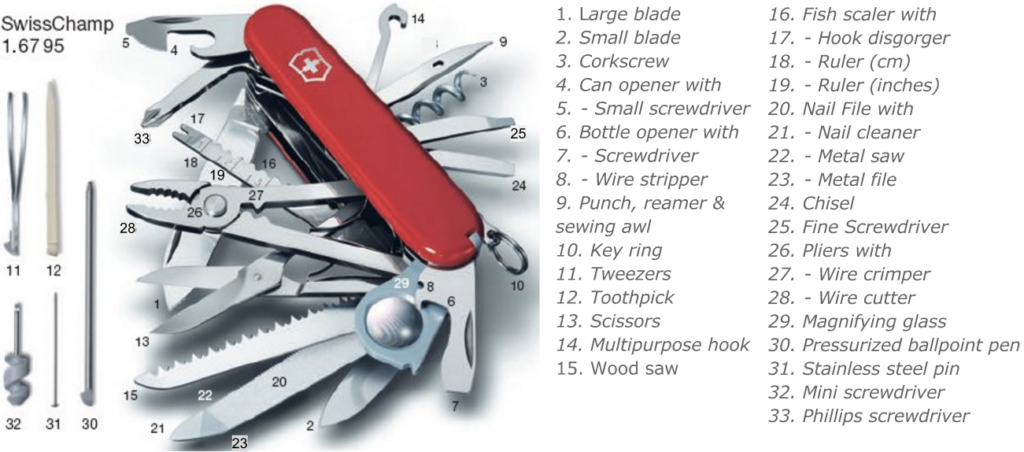
Here’s what I know about the Swiss Army Champ:

  • The steel used in all real Swiss Army knives is superb.  It holds an edge very well, and is remarkably strong and reluctant to break, provided that you’re reasonably careful.  I typically use the smaller blade for all small cutting and whittling tasks, saving the bigger blade for tasks that require a bigger blade — and there aren’t that many, by the way.
  • That little saw blade makes mincemeat of any branch or young tree trunk.  Try cutting any wood thicker than your wrist with a knife, any knife, and you’ll find it takes a long time (and energy).  You’ll also need that (included?) sharpener (if you’re allowed to take one, that is), because nothing dulls a blade like chopping wood;  ask me how I know this.  That saw on the Champ?  Cuts through anything, pretty much, with very little effort.
  • The magnifying glass starts a fire in about 30 seconds, and requires no skill — very much unlike trying to start a fire with a flint.  Just try using a flint — or watch any of the “Survival” TV shows — to see how time-consuming and frustrating fire-starting with that method is.  And yes, the glass only works in daytime:  try using a flint to start a fire in pitch darkness, I dare you.
  • Ever got a splinter in your hand or finger, and left it alone for a while?  Yep, it starts to fester, and quickly.  So you’ve got to get it out ASAP, and all you have is a bush knife?  Good luck with that.  The Swiss Army Champ has not only tweezers, but pliers as well.
  • Speaking of the pliers:  good luck getting that rotting tooth out of your mouth with a bush knife.  (Once again, see how Tom Hanks had to do it on his deserted island.)  Now add a few more tasks that are made easier with pliers and are almost impossible with a large knife, and you’ll get my drift.
  • To avoid rotting teeth, by the way, you’ll need to clean them after every meal.  Well, you can use your finger, of course, but the problem lies with those little bits of food stuck between your teeth.  Oh wait, what’s that?  The Champ has a toothpick tucked away in the handle?  Yeah, picking your teeth with a machete or bush knife is not a pleasant prospect, even assuming you can get the blade into your mouth without turning your face into the Joker’s.
  • Assume you have coconut trees on your island.  With that big survival knife, you’re as likely to cut the shell open and lose half the coconut milk in the process.  Sure, the islanders make it look simple and easy;  but that’s all they do, day after day.  Someone who doesn’t is going to make a big mess and waste a lot of time and energy.  Now that little spike (awl) on the Champ?  It makes two small, neat holes (once again without too much effort), so that you can pour the milk through one into your mouth without losing any (the air flows in through the other so that it pours smoothly).  I’ve done it myself, several times, and it works.
  • And if you need to sew anything (using stripped bark or lianas or whatever), that same spike has a little hole that you can use for thread.  Granted, it’s not perfect;  but your One Thing probably wouldn’t be a Bernina anyway.

Which, I think, is the whole point about a general-purpose tool like the Champ.  Granted, it doesn’t do anything very well;  but it does a whole lot of things reasonably well — and those things might make a huge difference to your chances of survival.

I cannot tell you how many times people asked me to borrow my Champ during the two activities I described above, to take care of one thing or another.  In every case, I refused to lend it to them, but did the tasks myself (I was not going to risk having the Champ broken by some heavy-handed Boy Scout or troopie.)  (Aside:  Swiss Army knives are streng verboten  in Boy Scouts because they don’t have locking blades.  Yeah, you have to be a little careful when using them.  Welcome to Grown-Up World.)

So I’m not saying that a large bush knife is a Bad Thing — anything but — but I prefer versatility in a situation that is likely to throw multiple problems at you.

By the way:  I found yet another Champ — in my gun bag — yesterday, so that brings the total I own to five.  Too many?  I don’ theenk so, Pedro.
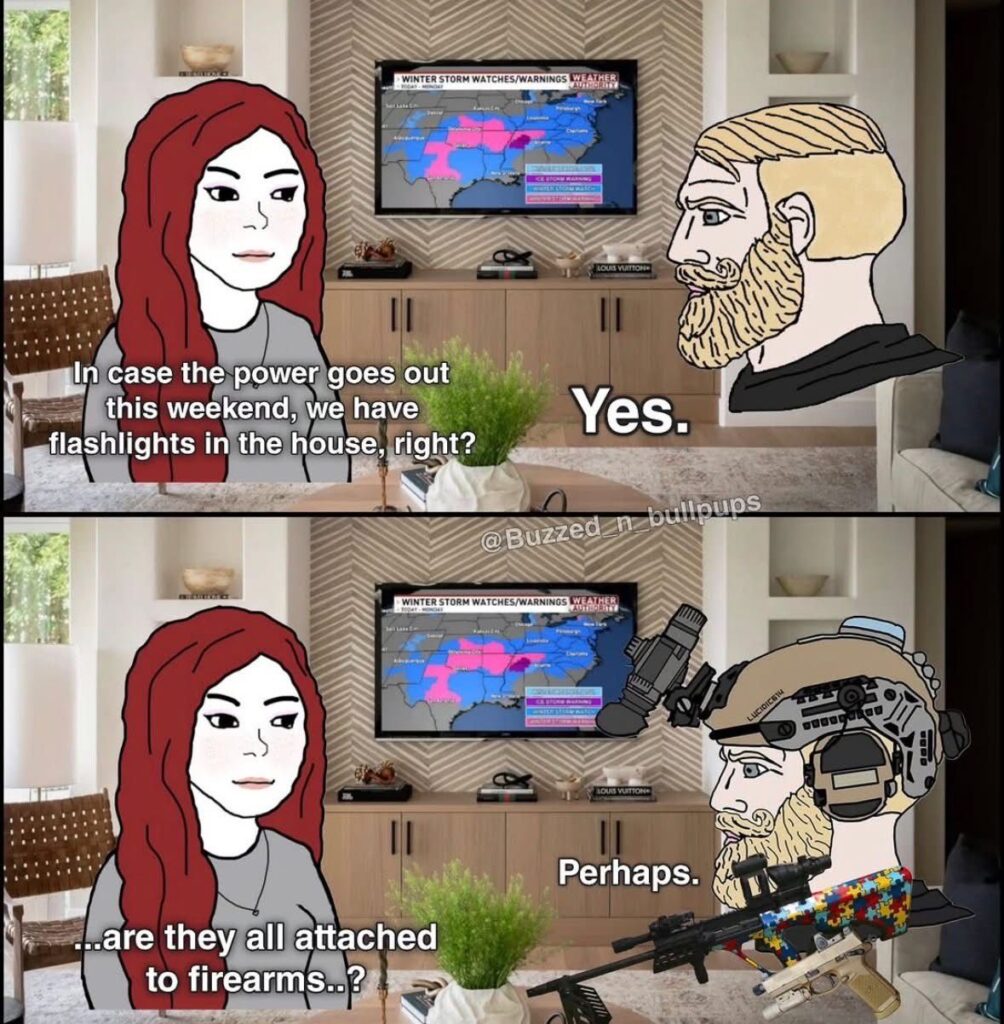
Scenes From A House

…in the Doc Russia Crisis Center:

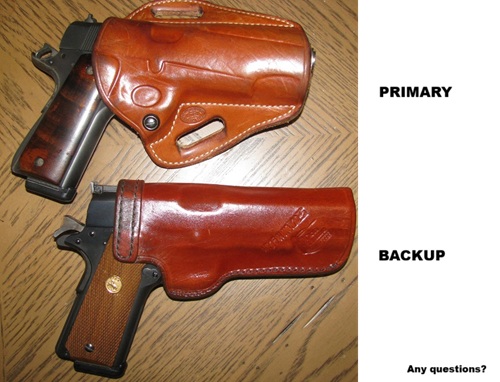
It’s kinda the same in Kim’s Bunker, except that there’s a flashlight or two next to every “home defense” firearm, i.e. no further than arm’s reach regardless of my location in the house.

I don’t have a flashlight attached to any of my firearms.  No big reason;  I just don’t see the need to identify my position if I’m about to activate the bang switch.  YMMV, and that’s fine — there’s no need for debate on the issue, because I can see both sides of the argument.  It’s just a personal preference.

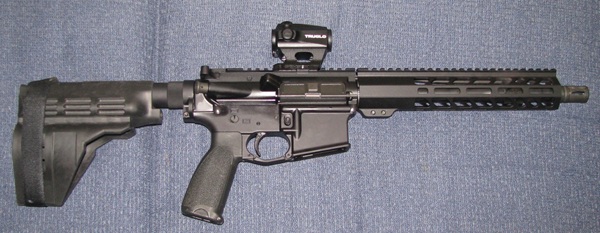
I might change my opinion in the case of the Poodleshooter Piece:

…but I’m still debating the issue with myself.  Frankly, I can’t see a situation developing (for me) in which some serious* anti-social night-time activity might become necessary;  but I’m not closing my mind to the eventuality, either.


*that can’t be handled by half a dozen or so rounds of .45 ACP or .357 Magnum, I mean.

Hollies

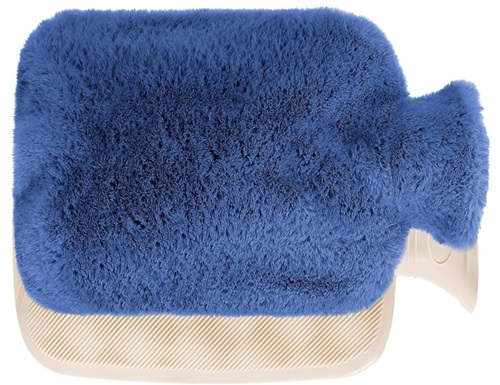
No, not the 60s Brit vocal band.  I refer here to that ancient bed warmer known as the hot water bottle.

With the advent of electricity, the humble hot water bottle (known to many from childhood as a “holly-bolly” or the derivations thereof) fell from favor, hanging on mostly as a palliative for things like muscle strains and sports injuries (filled either with hot- or icy water, depending on need), and the world switched to electric blankets and so on.

Well, this is all well and good;  but when the electricity fails, what then?

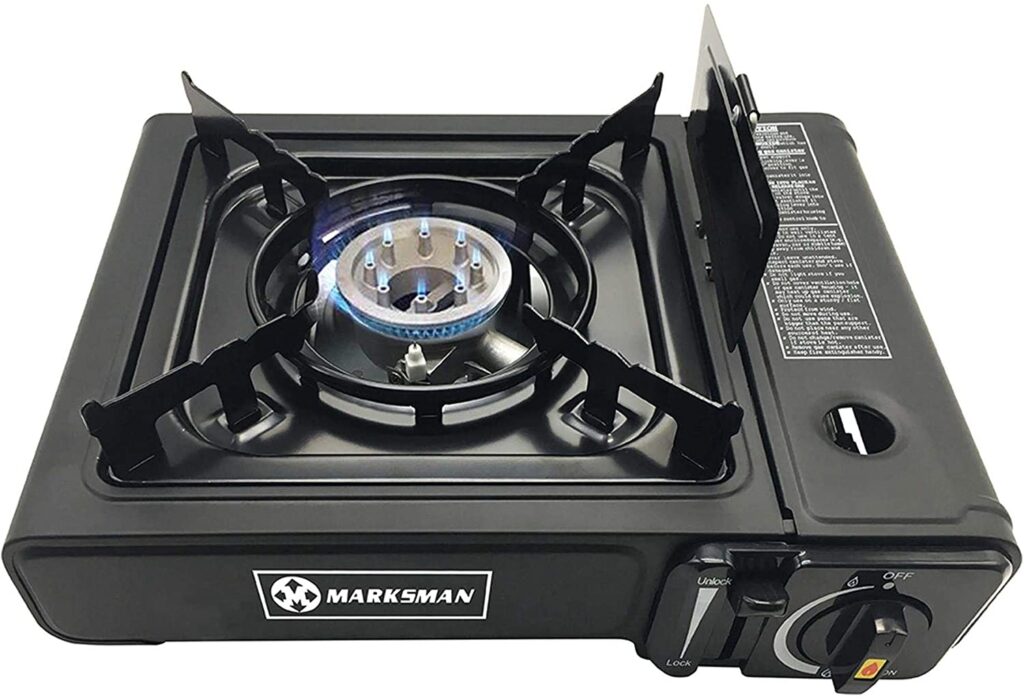
One of the SHTF necessities I’ve mentioned often before is a butane-powered camping stove, or its smaller (and cheaper) domestic equivalent like this one:

You can of course go with the two-burner Coleman type (which is better if you’re needing to cater to a family, for instance), but I’ve always found the single to be perfectly adequate, plus it’s safer to use indoors for short periods.

Now what does this have to do with the holly?

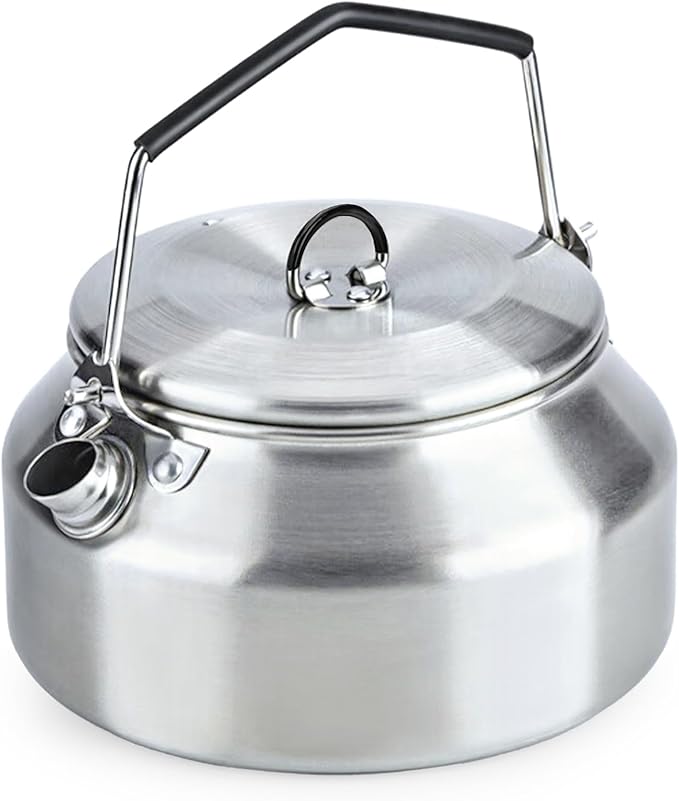
Well, coupled with a camp kettle:

…this means that when the power goes and you don’t have access to any other heat source like a fireplace or gas heater, all you need to do is heat up some water on the camp stove, fill the holly and huddle under the blanket / duvet / whatever to keep warm.

I know, this sounds so self-evident that it invites ridicule;  but at the same time, back in 2015 when most of Texas was without electricity for nearly three weeks(!), our family was caught short in the personal-heating department because we had no hot water bottles.  (Of course, we had lots of electric blankets and foot warmers, a leftover from our sojourn in Chicago;  but in Chicago they can handle brutal winters.  Texas?  Not so much, thanks for nothing ERCOT.)

New Wife and I have one each, and when this cruel winter is over I’m going to get another two.  (Why?  Because two is one and one is none, that’s why.  And hollies wear out, especially when you fill it with very hot water — that rubber perishes, ask me how I know this.)

Yet another example of how sometimes, the old things just work better when modernity comes up short.

Thoughts On That Poodleshooter Post

My acquisition of an AR-15 “pistol” (above) generated more than a few comments, but the one that interested me the most was this one:

Your friends are logically planning for group support. They’ve got your back, and you’ve got theirs. 

Armies standardize platforms and calibers for a reason. Sometimes, that’s a compromise.

The scenario in question is a group defensive action, and one of you runs out of ammo. If it’s you, and you’re the one shooting .375 H&H, you’re just outta luck. If it’s your best friend, and all you’ve got is 7.62×39, he’s dead. Because you won’t give up your outdated niche calibers.

Harsh, but true.

Then again, I remember back when 7.62x51mm NATO was the mainstream, and the .223 Rem was the varmint-appropriate “niche caliber”.  But that’s not the point.

Frankly, knowing my friends as I do, if there were any suggestion of a “group defensive action”, I know that each of them has at least one “spare” AR-15 poodleshooter to hand me, and let’s just say a sufficiency of ammo to share (actually, they singly and collectively have enough ammo for about a company of troops let alone just me, but let’s not go there).  I think we’re covered, in that regard.  (Oh, and by the way, if they happen to be at my place when the SHTF, let’s just say that I have the means to do the same for them, just with a sufficiency of 7.62x39mm as the “common” ammo, and the necessary guns to shoot them.)

What worries me is if I’m flying solo in a SHTF scenario.  In that dismal eventuality, the ammo-intensive “spray and pray” mindset is never going to be an option for me — my habit of “making every shot count” dates back at least half a century, and is unlikely ever to change. And I practice, endlessly, to ensure that I have the ability to support such an activity.

In that scenario, my go-to gun — if I have the time to make the choice — is always going to be an AK / SKS-type rather than an AR simply because when it comes to self-defense, I always want to be absolutely confident in my weapons.

I ditched carrying 9mm pistols for that precise reason — because I always felt “under-gunned” with the High Power despite its 15-round mag —  and now I carry only 1911s or (if I’m feeling like a change) a .357 Mag revolver.  And I understand that in these modern times, both of these gun types are “quantity-deficient”, ammo-wise.  To compensate for that, I just have to carry sufficient backup magazines / speedloaders (which I do) and practice reloading of same, which I also do;  the latter activity for something like an hour every single day of the work week, using empty mags and / or dummy ammo for obvious reasons.

As for the long gun option:  rest assured that my pack-out ammo load is sufficient to inflict a considerable reduction of numbers in any goblin horde I may encounter.  And I don’t want to wound or incapacitate said goblins, or shoot to make them keep their heads down or chase them away or whatever;  in that final extreme, if I’m really going to be forced to shoot, then I want fucking death to occur at the naughty end of my firearm.

And my caliber choices reflect that mindset.

Now all that said, as I think about this issue, there is a definite reason to keep the AR-15 pistol:  as a practice tool if ever I’m going to be forced into a “group defensive action” with my buddies.  It’s all very well to have a spare gun handed to you, but it’s useless if you don’t know how to work the damn thing.

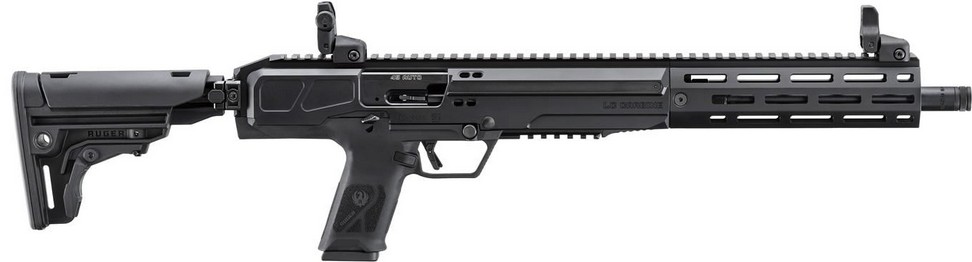
So I guess it’s probably going to stay in Ye Olde Gunne Sayfe.  But we’ll see… because if we’re looking at a small carbine (which is what the AR-15 pistol really is), then all sorts of options come into play — such as this lovely thing.

And everyone — my friends as much or more so than many — will have some .45 ACP lying around.


By the way, that insistence on ammo compatibility does not extend to our handguns.  Doc carries something chambered in 10mm (because he’s a big, tough guy — no sarcasm or irony, he really is), and CC (who is also big and tough) carries either a 9mm pistol or occasionally a .357 Mag snubbie revolver.  Interestingly enough, on a day to day carry basis I think I actually carry more spare ammo on hand than they do.  And in a SHTF scenario, I almost certainly have more backup .45 ACP mags than either of them have for their carry guns.

When The Elites Start To Panic

This little episode made me giggle:

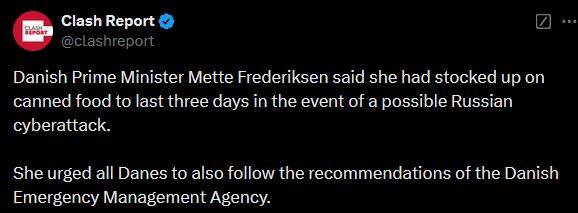
Three days?  Three DAYS?  Does she think that a miracle will occur, or the disaster have passed, by Day Four?

As I recall, the BritGov suggested the same time period — probably using the same asinine reasoning, if it can be called that.

At the risk of sounding repetitive on this topic, three months’ worth of supplies sounds more realistic, and still longer would be better (assuming that one has the storage space to hold all that stuff).

But no politician is going to suggest such a holding, of course, for two reasons:

  1. it may cause the population to panic, and
  2. it would suggest that the government might fail in its primary obligation (to protect its citizens).

…and we can’t have that, can we?  Far better to suggest a paltry three days, and allow vast numbers of people to perish from starvation, etc.

Of course, in unarmed Europe, “going shopping with my AK card” is not possible because of civilian disarmament and stringent gun control laws.

It’s a recipe for disaster, as any fule kno, but it couldn’t happen to a nicer bunch of neo-socialists.

Fundamental Principle

I have said, many times before on this blog and elsewhere, that in America there is no such thing as “taking to law into our own hands”, for the simple reason that in America, the law has never left our hands.  Oh sure, we have deputized its enforcement, mostly to local law enforcement and (lamentably) on occasion to the federal government.

But make no mistake:  if our deputized law enforcement is unable or unwilling to enforce the law (most often the former, thank goodness), then it is indeed up to We The People to make damn sure that it is.  Which is why we have statutes like the Castle Doctrine and “stand your ground” principles;  we have every right to defend our families and properties, and that defense does not require us to “run away” in the face of such predation either.  (Of course, in some states — Massachusetts, Minnesota etc. — such prescriptions are an anathema, which is why their citizens live in fear most of the time, whereas in Florida, Oklahoma and Texas criminals commit crimes at their own peril, and the law-abiding are not themselves prosecuted for providing that peril.)

Which brings me to the next issue involving fundamental principle:  disaster recovery.

The United States, taken has a whole, experiences a wider range of natural disasters than just about anywhere else:  tropical storms and hurricanes, blizzards and deep freezes, earthquakes, volcanic eruptions, wildfires and floods;  you name the manifestations of that bitch Mother Nature’s enmity, and we get ’em, good and hard.

Typically, the responses to such disasters take several forms:  at state level, if the government has its ducks in a row, you have disaster preparation such as Florida having a veritable army of utility workers prepositioned to make sure that infrastructure can be restored quickly (thank you, Gov. DeSantis), or Texas having a “rainy day” fund for precisely that purpose.  And if you can take anything to the bank these days, it is the generosity of ordinary Americans to help out where they can, trucking in supplies such as water, food, construction materials and so on, quite often without asking any form of compensation other than grateful thanks from the recipients.

And then you have the federal government’s attempts at recovery assistance.  What a fuckup.  The so-called Federal Emergency Management Administration (FEMA) has proven itself most recently to be completely and utterly inept, which by the way is typical of any Big Government agency trying to address a local situation:  they screw things up.

Worse still, when Big Agency can’t provide assistance, its inherent systemic arrogance often leads to hindering and even preventing assistance from being delivered by private individuals and organizations.  (It’s a childish and petulant attitude that “If we can’t do it, then nobody can”, and it’s a typical manifestation of bad government.)

Over at PJMedia, Scott Pinsker has written a fine piece on just this topic.  Go ahead and read it because it contains all the details that I can’t be bothered with;  but at the end he comes to this conclusion:

Most FEMA fieldworkers [as opposed to FEMA management — K.] are doing the best they can.  But something profound is going on:  The American people have stopped expecting the government to help them.  Instead, they’re turning to the Free Market.

And:

The majority of Asheville residents (the ones who are still left) probably couldn’t tell you who runs FEMA. But I guarantee you they know who Elon Musk is: He’s the billionaire who’s actually trying to make a difference.

And when help finally comes to North Carolina, it’ll be from Musk — not Uncle Sam.

Keep your eyes on this: The ground is starting to shift… and not because of natural disasters.

I expect that voters are going to demand from their state governments that they (state government) and not FEMA be held responsible and accountable for disaster recovery.  What should follow after that is the state government should actively prosecute federal officials for getting in the way.

And I’m not advocating this, but I am warning of it:  the next time some FEMA helicopter “propwashes” an “unapproved” private supply dump, do not be surprised if local residents react violently.

I’m pretty sure that I’d be tempted to, in such a situation — and I’m ordinarily the most law-abiding person I know.  But catastrophe and disaster are not “ordinary” situations, and while a federal government agency may see it as just another bureaucratic exercise needing proper, orderly management, the people on the ground won’t, and shouldn’t.

Their lives and community are more important, and the sooner Big Government realizes that, the better — because if they don’t, a shit-storm will follow, and it will be their own fault.