Leaving Their Market Behind

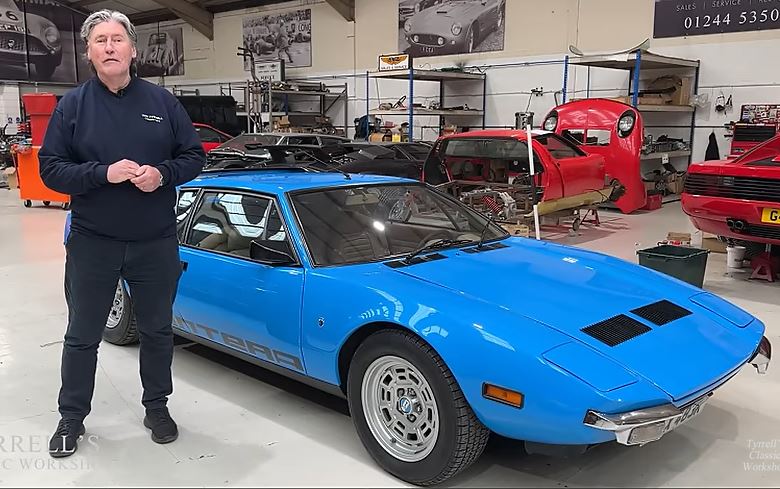
In his latest video, Harry Metcalfe takes aim at supercars — or to be more specific, their manufacturers — and their ballooning love affair with technology.

Now Harry lives in a different world from pretty much 99.99% of the rest of the world, because the market for the insanely-priced supercars is absolutely minuscule;  and his point is that the market is shrinking still more.

I don’t care about any of that, and I’d bet good money that pretty much none of my Readers could give a rat’s ass about it either, for all sorts of reasons:

  • we couldn’t afford the frigging cars even with a decent-sized lottery win;
  • even if we could, we have too much common sense to spend that amount of money on an asset that depreciates, on average, about 50% per annum, regardless of how many miles you drive the thing;
  • and lastly, we all shrink from the Nanny Technology that takes away from the pure enjoyment of driving (not to mention the intrusive data harvesting and so on, which I’ve ranted about before ad nauseam).

I’m not even going to talk about how fugly all these new super/hypercars look, because that’s also a frequent target for my rants on these pages.

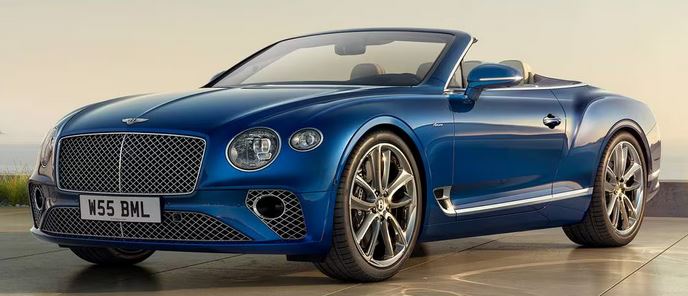
Lest you couldn’t be bothered to spend half an hour in Harry’s company, let me illustrate his point about car depreciation by looking at a car we all know about:  the Bentley Continental GT convertible (GTC, for the cognoscenti ).  Here is the 2024 model, with its 4.0L V8:

I have to say, by the way, that it looks absolutely gorgeous:  very definitely a worthy successor to the 1930s “Blower” “Speed Six” Bentley which won Le Mans several times.  It’s price, however, does not look absolutely gorgeous:  $340,000 with only a few adornments.

Which is bad enough.  Now let’s look at its second-hand value.  Here’s a 2015 GTC:

Looks more like a limo than the 2024 model, but essentially it’s the same car (same engine, same luxury interior, etc. etc.) but with… 15,000 miles on the odometer (about 1,500 miles per annum of ownership).  Its price:  $90,000 (!!!).

All sorts of things come to mind, most of them unprintable anywhere except perhaps on this website.

I’ve said it before and I’ll say it again:  there is no justification — none — that can justify the prices of these upscale cars (and of the supercars we will not speak because Ferrari and the other thieves only make a few of them each year, thus ensuring their consistent “value proposition” — read:  snob appeal for the terminally-insecure rich).

Of course, the thieves (and their sycophantic customers) will cry out that it’s all the new  whizz-bang technology (“All hail Technology!!!”) that makes their cost of manufacture rocket into the stratosphere.

Unfortunately, as Metcalfe points out in his video, more and more people are looking at all that technology, what’s involved and how much money (not to mention weight) that it adds to the car, and are saying, “Eeeeehhhh I don’t think so, Luigi.”

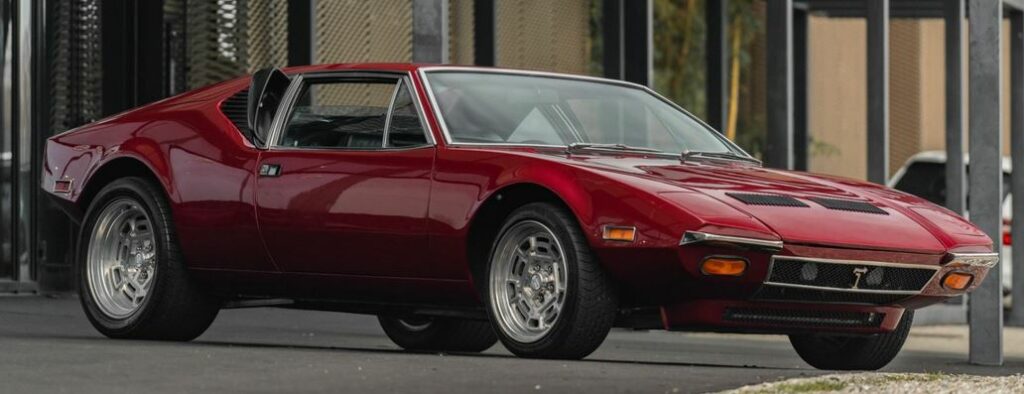
Which, by the way, might account for this atrocity:

Looks like the More Money Than Sense crowd are taking the $340 grand they would have dropped on a new jazzed-up Bentley, and instead splurging it on a rebuilt version of Ferrari’s entry-level model of the 1970s.

At least the Dino is bereft of anything that could remotely resemble a micochip.


There is a companion piece to this post:  it’ll appear next week.

Non-Starter

The old legend of Saxon king Cnut sitting in a chair on the beach attempting to stop the incoming tide by royal command is, of course, total bullshit.  Yes, he did that;  but he was attempting to show his idiot courtiers that his royal power had limits, and that there were forces over which no human authority had control.  It was far from being an object lesson in overweening pride and hubris (as it so often is used today), it was the precise opposite.

And here’s its modern-day manifestation.

Anyone with half a brain would have known that battery-powered trucks were a non-starter, for the simple reason that trucks aren’t cars:  they require power, lots of power, to move heavy loads, and sometimes over long distances or over power-demanding terrain withal.   Ferrying humans to and from the supermarket or soccer practice, sure.  Gadding about city streets, absolutely.  But that’s not what trucks were designed for.

So despite boutique efforts like Tesla’s dumpster-looking pickup (surely ol’ Elon was just having us on), all EV pickups were doomed to fail, as has just been proved:

Ford Motor Company is halting production of its electric F-150 Lightning pickup truck at a Michigan factory, the auto giant announced Thursday. Just three years ago, President Joe Biden and Rep. Elissa Slotkin (D., Mich.) visited the plant to celebrate the truck’s rollout, calling it an “incredible facility” that shows there’s “no limit to what American ingenuity and manufacturing can accomplish.”

Ford—which, like other major automakers, has struggled to keep its EV business afloat—will shutter the Dearborn, Michigan, manufacturing plant beginning on Nov. 18 and until Jan. 6, 2025. “We continue to adjust production for an optimal mix of sales growth and profitability,” the company said in a statement Thursday. 

Expect the plant to continue that suspension way past Jan 6, 2025 despite the weasel corporate-speak, because when it comes to pickup (or any other) trucks, EV production will never achieve an “optimal mix of sales growth and profitability”.  (As an aside:  anything hailed by FJB, including his choice for VP, has the automatic stench of failure about it.)

So here’s where the Cnut example becomes more relevant than ever:

Ford’s halt in F-150 Lightning production highlights the disastrous impact of federal EV mandates driven by the Biden-Harris administration,” Jason Isaac, the CEO of the American Energy Institute, told the Washington Free Beacon.

In other words, just because the .dotgov says it must happen, that doesn’t mean that it will.

We’ve seen it before with the laughable sustainable energy mandates, where wind- and solar power hasn’t even come close to expectations of consistent electrical delivery (nor will it ever, because — and I hate to repeat myself — anyone with a brain could have told these terminally-deluded dreamers of that outcome).

But control freaks of the ecological- and socialist persuasion [redundancy alert]  persist in thinking that if they simply order Net Zero to happen by x date, it will happen.

The collapse of the EV market is simply a signal — a foreshadowing, if you will — that as these idiots remain sitting stubbornly in their chairs on the beach, the tide is most assuredly coming in and will drown them.

We should be so lucky.

The problem is that these assholes are trying to force us all to sit with them.

“American automakers and workers are paying the price for policies that ignore real consumer demand,” Isaac continued.

…and it’s not just automakers and workers.  It’s everybody.

Human Interest

When people so often ask me why I read the horrible Daily Mail newspaper, I can point to stories like this one, which somehow always escape being covered by U.S. newspapers:

A grandmother and son embarked on a once-in-a-lifetime road trip in a vintage Caddy.

Annie Koehler, 79, and Jamie Hutchins, 60, completed the cross-country excursion last month – traveling 4,200 miles in nine days with the windows down. 

The duo traveled across the US — from Illinois to Santa Monica- – in a Cadillac he custom-made.

Despite dating back to 1957, the De Ville made it an astounding 4,200 miles in nine days, Koehler said in an interview – noting how the trip was all done with ‘the windows down.’

The retired trucker also said she needs a new set of tires – after making the journey at 90 mph and winning a couple ‘burnout’ competitions on the way.

Wait… she’s the “retired trucker”?  Could I love her any more?

Lemme tell ya:  among my several posts about doing a long-distance trip in an old car, I’d never have thought about having someone like her as a companion;  but I would now, in a heartbeat.  (But is there anyone “like her”?  I doubt it.)

And by the way:  4,200 miles in nine days, with a couple lengthy stops for the “burnout” competitions… you work out their average speed — in a rebuilt ’57 Caddy.

Fantastic stuff.  Thanks, DM — you made my day.

Old Vs. New

I know that I am irretrievably old-fashioned, and here’s the latest example.

Former footballer David Goldenballs Beckham was seen proudly showing off his new car, a McLaren 750S, valued at about £240,000 ($310,000).

Now never mind the stupid-money price (I know, the McLarens are supercars and probably worth it, just not to ordinary people like us.  Forget the money for a moment, if you can).

Now take a look at this nuts-and-bolts restored/upgraded 1964 Jag E-type Series 1:

It looks so hopelessly out of date compared to the 750S, doesn’t it?  And yet it’s on sale for a third less than the McLaren, at $218,000.

That’s also stupid money, but I have to tell you that if I had that kind of stupid money, I’d be driving that Jag already, and not the blingy over-powered and overpowering McLaren.  Just for kicks, know that the 750S needs to have its oil changed about every thousand or so miles, an operation which requires the engine to be dropped out of the engine bay, and can cost in excess of $25,000.  The Jag?  Nothing even close to that in cost, let alone inconvenience.  Hell, with a little learning and practice, you could probably do your own oil changes.  (Not that I would.)

Take a look at the Jag’s interior:

…compared to that of the McLaren:

Note the thoughtfully-placed accommodation for Goldenballs, or maybe it’s a pee-hole for Victoria in the passenger seat… either way, that interior looks like it was designed by LucasFilms.

Sorry, but no.  I love cars, I love performance cars, but to be honest — and this was as true back when I was younger as it is today — that wonderful Jag 3.8-liter engine, with its top speed of about 140mph is far more appealing than the million-horsepower McLaren electro-gizmoded powerplant.

And to be honest:  I think it’s far easier to get in and out of the E-type — and that’s a nod to my advanced age.

Beckham can afford the McLaren, and there’s no wealth envy on my part.  What I can’t forgive is that he gave his son an E-type for a wedding present — except that he’d had it converted to an electric motor.

Piling On The Misery

Continuing the saga of electric vehicles (EVs), we learn about the fire risk.  An excerpt from the catalogue of catastrophes:

It is now, or should be, common knowledge that electric vehicles—cars, trucks, buses, bikes, scooters—under conditions of even low humidity or water damage, are prone to catching fire, owing to the unstable nature of the lithium-ion battery. As Chris Morrison writes at The Daily Skeptic, EVs are known to explode “with the force of a bomb blasting super-heated jets of flame, melting and decomposing nearby structural materials including metal and concrete, and sending vast amounts of toxic fumes into any enclosed atmosphere.”

Jammed into underground parking garages or packed in ferries, EVs are harbingers of almost unimaginable disaster—ecological and safety menaces to which the Net Zero fanatics among our political leadership are comatosely indifferent.

  “Willfully indifferent” is the more appropriate term, because as with all faith-based belief systems, danger is set aside as an acceptable risk provided that the goal thereof (in this case, Net Zero) is laudable.

My solution, which is that every time one of these EV things catches fire spontaneously we should toss a Greenie into the flames, would no doubt strike some as excessive.  Nevertheless, even the threat of such an action should shut these assholes up.