Interesting Take

From Insty, talking about some guy who quit Notre Dame in disgust:

“Members of the managerial class care more about their reputation within that class than about the success of what they manage.”

(Please follow the link first so that the rest of what follows makes sense.)

Glenn’s absolutely correct, if the above is applied (as he does) to academia.

In the real world?  Not so much, because managers there need to ensure that their operation survives in the marketplace, which is more important than collegial reputation.  Perhaps an organization like Notre Dame can shrug off the resignation of one of its star performers, but it’s a rare business that can do so without suffering some form of service- or product degradation.  (Of course, nobody is irreplaceable, especially in a country like the U.S. which is blessed with an abundance — sometimes even a surplus — of talent.)

I would suggest, however, that in contemplating the above, the loss of a star senior manager for the reasons given by the Notre Dame professor (i.e. dissatisfaction with the corporate direction) should be read as an alarm bell by his erstwhile superiors — and it often is.

If that alarm bell is disregarded or belittled, however, there are generally speaking only a couple of reasons why this would be the case.

The first reason might be that the corporation is so rotten and the top executives so incompetent or misguided that the resignation may not only be accepted with a shrug, but welcomed.  If this is the case, then the corporation is doomed.  (Notre Dame, and by extension most of academia itself would be a prime example of this.  When student numbers fall because the product is too expensive and the product’s value is regarded as irrelevant — as with most non-STEM undergraduate degrees — and potential students are drawn instead to trade schools or industries which do not require a degree for admission, it’s hard to argue that a reassessment and redirection of the corporate mission or product isn’t critical.)

The second reason why the resignation of a key player wouldn’t be important to the corporation’s directors is that the value of their product is declining in the market, generally speaking.  It’s an extension of the first reason, of course, but what that says is that the upper management is either oblivious to that reality (i.e. truly incompetent) or else they are fully aware of that product’s decline, but are intent on riding the gravy train even if the train is heading for a distant cliff.  Given the advanced age of senior management in general, this would be entirely understandable albeit contemptible.  Why try to effect change to a long-revered product when that effort would be exhausting, and when your own tenure is soon to end anyway?

Now add to that mindset the fact that attempting to change your product would bring opprobrium and even resistance from your managerial peers in the market — no more invitations to industry conferences in Geneva or Fiji, reduced esteem in the rarified air of the industry oligarchy — and it’s easy to see why such change would be resisted.

And the larger the industry, the more difficult the change.  Imagine trying to change the corporate direction of Microsoft or Oracle, for example, and the scale of the thing becomes clear.

Now imagine the difficulty of changing the corporate direction and mission of an unimportant entity such as the United Nations.  In this situation, the resignation of a key manager — the United States — might well be injurious to the corporation;  but the mission (as it has been transformed from first principles) has become so entrenched in their Weltanschauung  that change would be regarded as not only impossible but destructive.

And by the way:  as with the United Nations, so too with academia.

Well There Ya Go (Part 2)

All-electric, huh?  Wasn’t that the call not even a year ago?  Looks like somebody may be having a change of heart:

Jaguar is reportedly considering performing a dramatic U-turn on its plans to become an exclusively electric car maker, according to reports.

Sources close to the project told the Sunday Times that bosses have instructed engineers in the UK to develop a new petrol-electric hybrid engine it can offer as an alternative option to customers in what would be a significant one eighty on its all-electric rebrand.

The ‘secret initiative’ is part of efforts to ‘soothe drivers’ concerns’ about range anxiety amid a slowdown in EV demand across several major markets, which has already triggered a number of manufacturers to delay their own plans to go all in on battery-powered cars.

And you can all stop that derisive laughter now, okay?

Welcome Back

This, I think, is Good News:

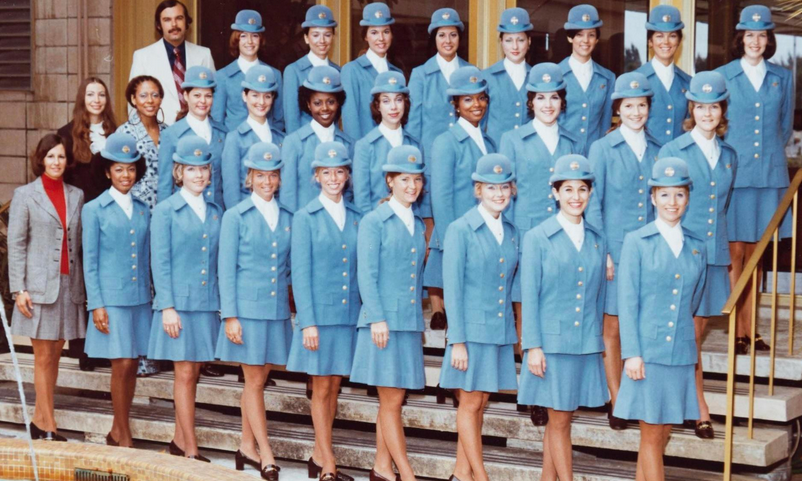
Long-defunct airline Pan Am is inching towards revival more than three decades after going out of business.

AVi8 Air Capital and Pan American Global Holdings, which owns the intellectual property rights to the Pan Am brand, have begun the certification process with the FAA. AVi8 announced they have completed a business plan for the brand’s revival efforts.

“Avi8 has assembled a world-class team to lead the certification effort and has received strong initial support from aircraft lessors and key vendors,” the company said on Thursday.

If all goes to plan, the company will be based out of Miami with a fleet of Airbus aircrafts*.

Right off the bat, let me say that I loved Pan Am, both the airline and its philosophy — well, before Juan Trippe chased after the lower-income market and cocked up the brand (as documented here).

I just hope that the New Pan Am doesn’t try to be another Spirit or JetBlue (joint motto:  We invented cheap ‘n nasty travel, and we never fail to rub your noses in that ), because that way lies utter, abject failure.

As I said earlier, Pan Am’s road to aviation success and profitability is not through the mass market, but by catering to the affluent traveler, with peerless customer service and spotless aircraft.  Like they used to.

Despite Pan Am’s earlier demise, their brand might still have some cachet left over, even now.  And if they relaunch and re-brand the airline back to its heritage and strengths (including — gasp! comely flight attendants and not grab-a-granny / tattooed slatterns, some overlap), I can almost guarantee they’ll do well.

Go for it, guys.  I for one look forward to your trip [sic] with great anticipation, and I hope that future passengers won’t be able to beat the experience…

And by the way:  resist the impulse to change your old logo.  It was wonderful then, and will serve you well now.


*Ummm… it’s aircraft not aircrafts — “aircraft” is both singular and plural, like “sheep” or “deer”, but let’s not have that interfere with the good news.

When The Market Bites Back

Probably one of the first golden rules of business is “Never anger your existing customers, and never ignore those customers in chasing after new customers”.

I seem to bang on about this endlessly, but I’m always reminded of just how stupid management can be in ignoring that rule.

Now add on an unbelievably-stupid rationale for changing a company’s product line, and…

Wait.

There’s a much better way to look at this foolishness.

First, I invite you to watch Richard Hammond talking about some new Porsche he test drives at the old Top Gear track.  Because if you watch his glee and excitement, then this little video about Porsche’s idiocy becomes all the more understandable.  (Note especially the effect of Porsche’s marketing decisions on their share price and earnings.)

Nice one, dickheads.

No Surprises There

It appears that the Mighty A.I. is falling somewhat below expectations:

95 percent of organizations see no measurable return on their investment in these technologies, even as the number of companies with fully AI-led processes nearly doubled last year and AI use has likewise doubled at work since 2023.

Specifically:

Today’s generative AI models are very good at identifying patterns and stitching together bits and pieces of existing content into new compositions. But they struggle with analysis, imagination, and the ability to reason about entirely novel concepts. The result is often content that is factually accurate and grammatically correct but conceptually unoriginal.

“Workslop”, indeed.

Perfect Sign-Off

It’s a good thing that a) most of the time I worked in Corporate World, there was no email;  and b) I only discovered this gem at Kenny’s yesterday:

There’s no telling how many times I would have used this as a response to 80% of the office memos I got.  (“Only once, Kim.”)

Yeah, but it would have been totally worth it.