







As you may remember, I went back to university in my mid-fifties to get a college degree, ending up with a B.A. in Modern Western European History. There’s no reason for having specialized in that as opposed to say Classical History (which I had studied before, many years ago), because to me, pretty much all history is interesting.
Anyway, one of the courses I took was on the French Revolution, delivered by one of my favorite professors, Michael Leggieri*. He opened the course by giving a single lecture on what exactly the French were revolting against. It wasn’t just the monarchy and the Church they hated so much (with, it should be said, considerable justification), but theirs was a reaction to the entire societal structure, which was largely still medieval and had the effect of not only grinding the noses of the common people into poverty, but preventing them from ever rising out of that miserable state.
Small wonder they went all French (i.e. overboard) and took a long trip down Guillotine Road. I might have done the same, in their position.
Anyway, Leggieri’s lecture lit a spark in me (as so many did), because I had no more than a passing acquaintance with the period between the Dark Ages and said Revolution in Europe.
Sadly, Life intervened and I wasn’t able to devote much time to studying that period… until now. I was chatting to New Wife the other night, and told her that I’d been doing a lot of reading while she was gadding about Seffrica with the Beloved Grandchildren. When she asked me what I’d been reading and I told her (history, duh), she ordered me to go to Half Price Books and get more because Aren’t You Sick Of Reading About The Same History All The Time?
Well, no; but the point was a valid one.
So off I went, and the first book to catch my eye should be a decent gateway, I think, into further study: the New Cambridge Modern History VII: The Old Regime 1713-63. It’s seems like a fairly comprehensive study, I think (after but a cursory glance at the contents pages), but it should set the scene properly. This work was first published in 1957 so it may be free of modernistic cant, but we’ll see.
And now, if you’ll excuse me… this book isn’t going to read itself.
*I see that Mike Leggieri has left U. North Texas and ended up at the University of Florida as . They are lucky, because he’s one of the best — and that’s not just my opinion, either. (He’s also very conservative, which helps.)
I read this little exchange with some interest:

Then, of course, you have the Kim Solution© to protect the citizen journalist and prevent him and his crew from being unjustifiably attacked by the Fuzzies:
Armed bodyguards
Even in Minnesodah, private citizens are allowed to hire licensed bodyguards for their own protection.
Of course, our intrepid journalist could take a leaf from the Muzzy Terrorist Handbook, and just use this Gerstein buttwipe as a human shield… but no doubt some people will think that this is Too Much.
Whatever. The real issue is what the DoJ is going to do about all this fraud and scamming.
And here’s a warning: conservative folk are getting really pissed off by all this fraud and similar criminal behavior being uncovered, and the perpetrators not being shot at dawn arrested and charged.
Kash Patel and Pam Bondi: the spotlight is now falling on you.

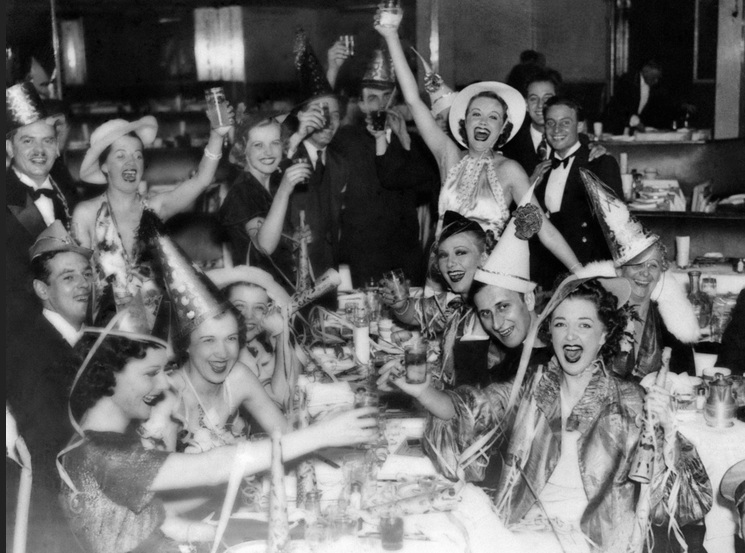
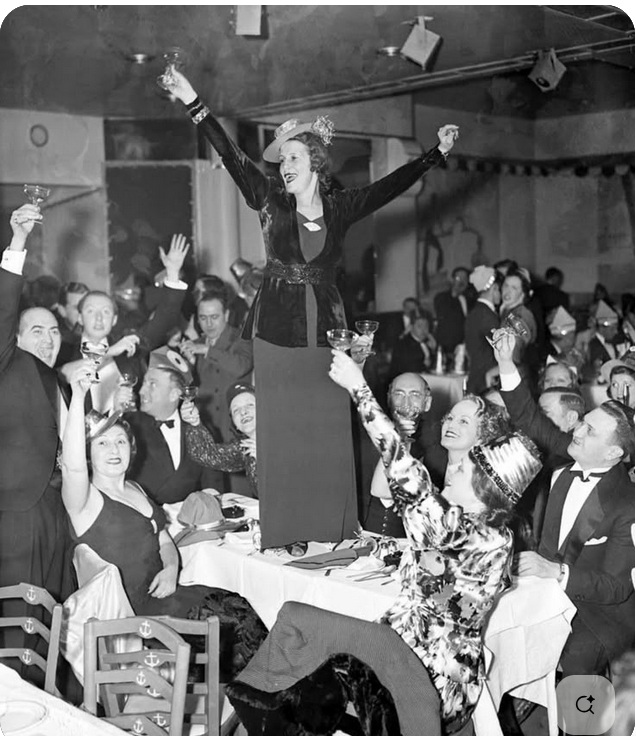
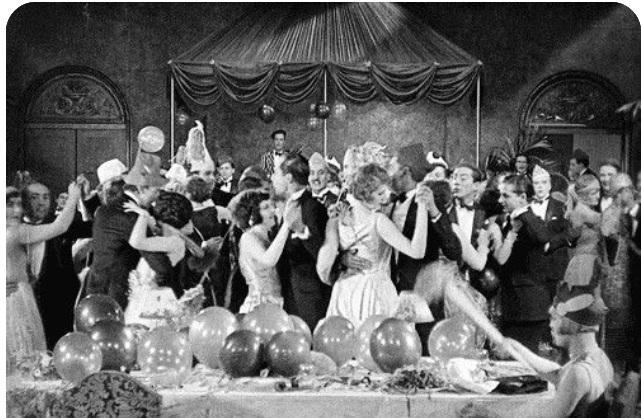
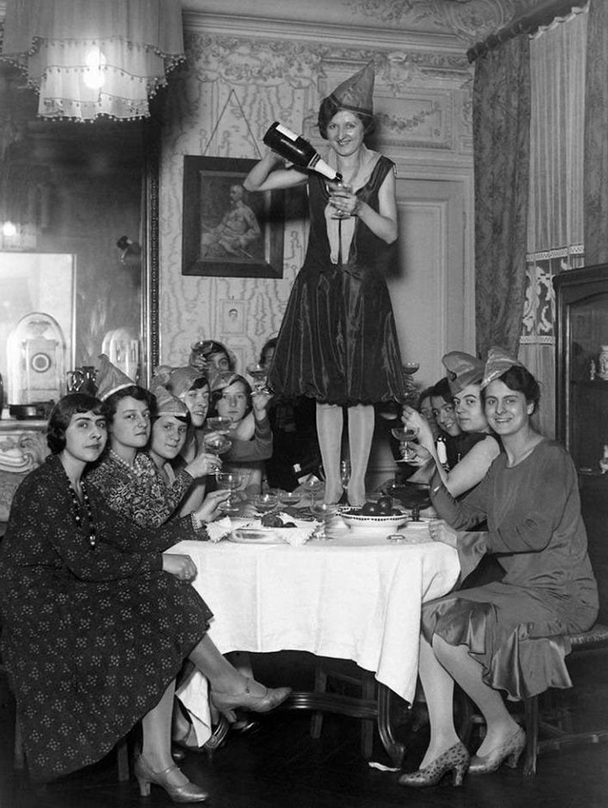

Okay, these may have been NSFW in 1931, maybe.
I’ll try to do better next year.
Of course, I read this with great regret and sadness, because it’s my home town being written off:
Johannesburg: The slow death of a city that may have outlived its purpose
Johannesburg is in an advanced state of decay, destruction, ruin, crime, waste, and all of it seems, sometimes, like a mirror image of South African society. We grieve over the once-great city in a veritable cult of grief.
But we are too afraid to look in the mirror because our vanity overwhelms our misery — we are, after all, a great people, and a great people we have to remain…
In and around the city, the families and communities in its suburbs and on the periphery are struggling to live full lives. As days and weeks go by, the denizens are losing reason to value their surroundings. The taps run dry frequently, energy supply is interrupted regularly, flagship institutions, and all those little things like roads, pavements, pedestrian crossings, traffic signs, road signs and robots are bleeding like wounds that will not heal on a body in terminal decline.
The city is depleted, and lacking in the nutrients and the energy necessary to bring it back to full functionality.
We can point, as we may, to mismanagement, maladministration, lack of planning, a lack of foresight and vision. We can, also, consider Johannesburg as a city that has reached the end of its natural life and is approaching the end of its purpose.
Johannesburg, as we came to know it, was established by European settler colonists in about 1886 for the sole purpose of exploiting the gold buried in the rocks below. Those gold deposits are finite. If it’s not entirely finite, mining it is becoming more expensive, while demand may well increase.
Yeah, what the hell. It’s just a shell of a place, an aggregation of concrete, glass and tarmac: it’s too difficult to govern or manage, so why bother?
One might also say the same thing about Manhattan or Los Angeles. In fact, one might say the same thing about all the major cities of the world, where concentration of the population has become too difficult and in most cases, too dangerous.
So let the animals take over and feast on the bones. And when the bones are gone and the animals need to go further afield to survive… then what?
And now, if you’ll excuse me, I think it’s time to go to the range.
It’s so nice to see that at least some people have the right idea about curbing illegal immigration and enforcing mass deportations of criminals.