Font-Wise

Before I read this article about “What Your Choice Of Font Says About You”, I picked my favorite fonts.  (I don’t actually care what anything “says about me”, because the opinions of others are largely irrelevant in my life anyway.)

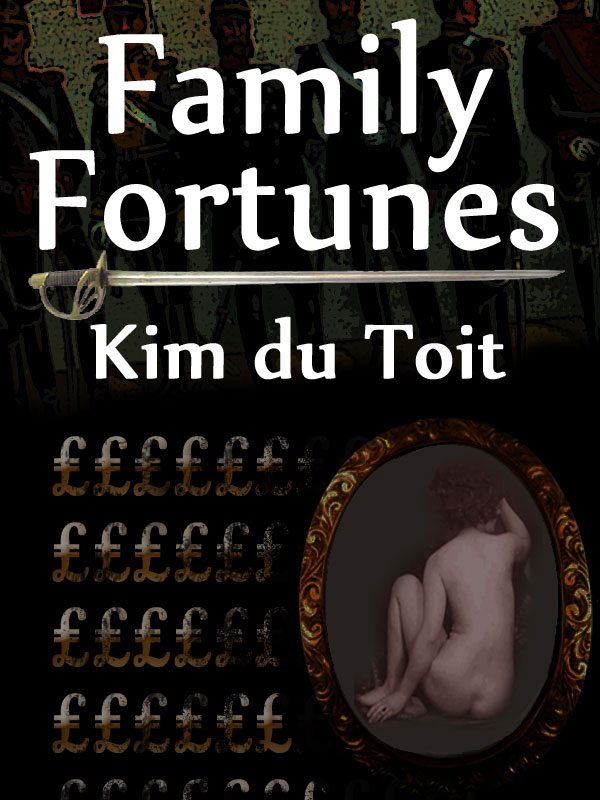
They are:  Times New Roman (or Book Antiqua) for my novels;  Verdana for this blog (although WordPress gives one no choice, I’d probably stick with it anyway because it’s highly legible);  and for some reason, I like Papyrus for my book titles — although I was talked out of it after the first edition of Family Fortunes by my editor.
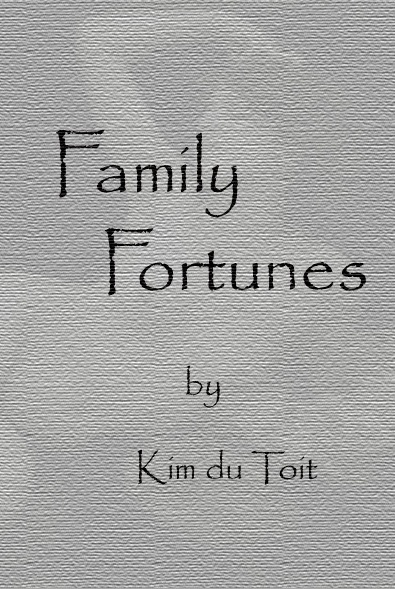
 

I was kinda disappointed by that, because I’d designed the first version myself, based as it was on Vienna Days (my first published novel):


…and which I wanted to continue through all my historical novels to come.  But no.  “Not punchy enough” and “Too whimsical” — and out went that design.

I still regret the change, though.

I had intended to have a totally different style for any non-historical works, e.g. Prime Target:
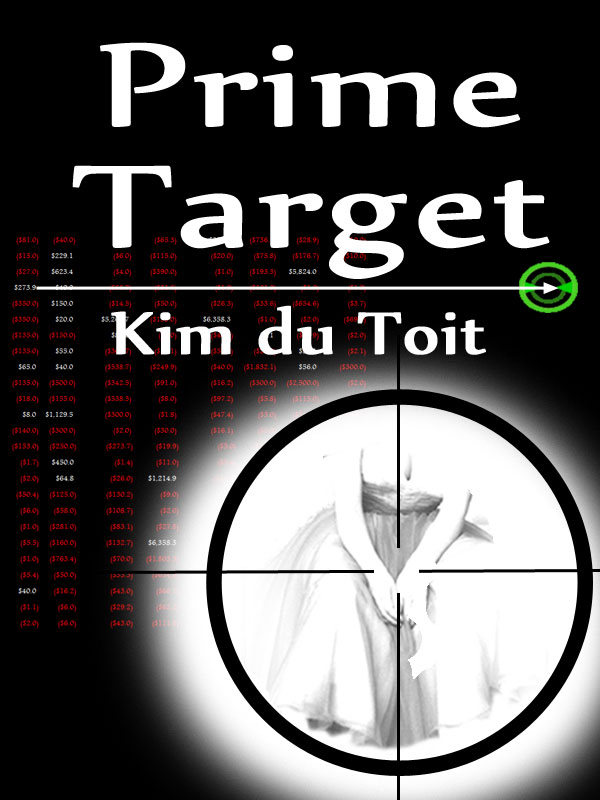

…because that format required a different feel, and I was quite okay with that.  But no:  “All your book covers should have a consistent look”, and as a one-time advertising and marketing executive, I had to agree with that.

It seems that I have digressed completely from the original thrust of this post, sorry.  Allow me to continue.

I find it interesting that a typeface / font should define a generation, but I shouldn’t be, really.  I mean, if I were to use something like:

…it might have worked back in the times of Edmund Blackadder (the latter word being the font’s actual name), but most readers of today would react by closing the book firmly, never to be read again.

Then again, there’s the Edwardian font:

…which might have suited the Victorian tone of Family Fortunes, but the readers’ reaction would probably have been the same.

But I draw the line at Comic Sans MS:

…which, as its very name suggests, should remain relegated to comic books.
And I don’t do comic books — neither writing nor reading.  Anyway:

The results revealed that Times New Roman – a font first designed back in 1931 – remains the most popular font, chosen by 27 per cent of respondents.

1931 is a little recent, for my liking, but as it replaced the handwriting-based Edwardian, it’ll have to do.

Then there’s this little snippet:

The news comes shortly after Microsoft replaced Calibri as its default font for the first time in 17 years.

It should come as no surprise to my Loyal Readers that Calibri is my favorite font for spreadsheets.

[200,000 words of angry anti-Microsoft vitriol deleted]

Then again, as I refuse to use the dreadful MS Excel at all, that change won’t affect me.

Welcome Expansion

Oh be still, my beating heart:

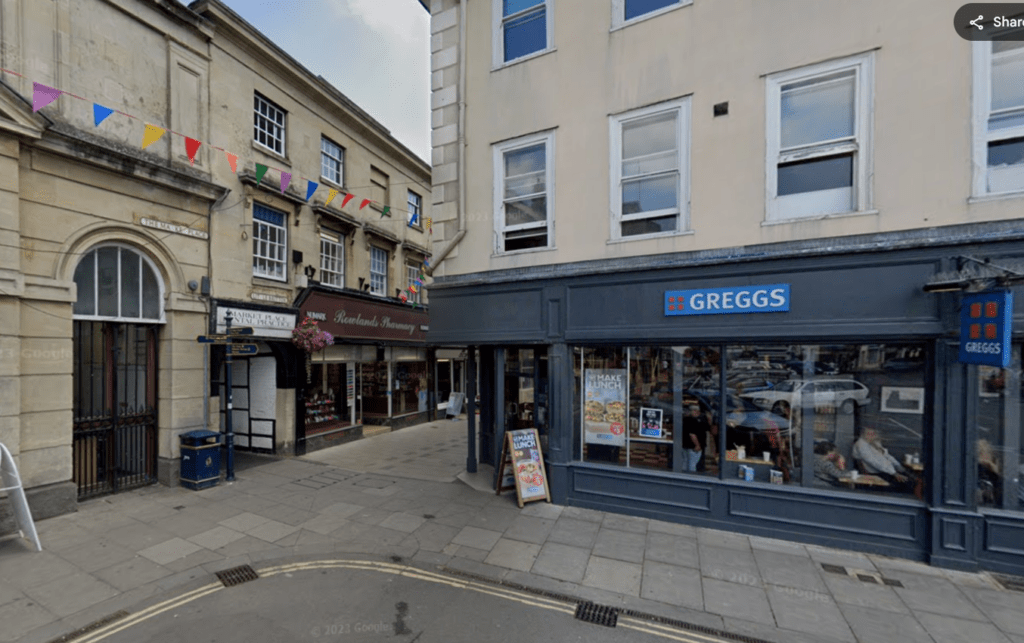
High street food chain Greggs is to open its first pub serving exclusive beers and a menu featuring its classic bakes and sausage rolls.

Just when I thought there was no reason ever to visit Britishland again, they do this to me.

Then again, this first (and so far only) Greggs-based pub is opening in Newcastle-On-Tyne, which exists in my mind simply as a railway station one passes through en route to Edinburgh.

But… beer and Greggs sausage rolls?

Back, Satan;  back, I say.

It’s just a Good Thing Greggs didn’t open their first pub in Devizes, Wilts.

The combination of steak bakes, sausage rolls and pints of Wadworth 6x… [exit, drooling]

Control Freaks

What is it with Germans and their fixation on control?  Here’s the latest from their foremost corporate branch of Control Freaks International:

The 2026 Mercedes-Benz CLA and the 2027 Mercedes-Benz GLC are the automaker’s first truly software-defined vehicles, meaning they have the brains and chips for virtually everything on the car that’s controlled by software to be updated over-the-air. They have the new Mercedes-Benz operating system, known as MBOS, as well as fourth-generation MBUX infotainment systems with fancy touchscreens, all developed in-house.  The new MBOS represents a paradigm shift, says Ola Källenius, chairman and CEO of Mercedes-Benz Group. It’s the gift that keeps on giving, with 100 percent of the car reachable via over-the-air updates. Now, cars come in with an empty electronic control unit (ECU) and then Mercedes loads [the software] into it as part of the production process, he adds. In the past, the ECU came from a supplier with the software already pre-loaded. Not anymore. Mercedes wanted an end-to-end software package it created itself.

Am I the only one who is getting chills from this little exercise as described?  Here’s why I’m both apprehensive and white-hot angry.

“It’s the gift that keeps on giving, with 100 percent of the car reachable via over-the-air updates.”

And those “updates” would include “shut-downs”, all at the behest of MBOS — and if you don’t believe they would, you haven’t been paying attention to the recent history of Germany.

Also, remember that “the gift that keeps on giving” refers to the gift to Mercedes, and not to its customer.

Finally, if you think that these “updates” will remain free forevermore, you really haven’t been paying attention to the history of technology companies — and Mercedes is increasingly becoming more about technology than about engineering.  Which means that at some point, the design of the updates will be left to A.I.

How nice.

Funny, that:  the GLA 250 was always on my list of potential future car purchases.  Not anymore.  I wouldn’t accept one as a gift, because of what I’d be giving up to Mercedes:  my freedom and indepence.

No Surprises There

It appears that the Mighty A.I. is falling somewhat below expectations:

95 percent of organizations see no measurable return on their investment in these technologies, even as the number of companies with fully AI-led processes nearly doubled last year and AI use has likewise doubled at work since 2023.

Specifically:

Today’s generative AI models are very good at identifying patterns and stitching together bits and pieces of existing content into new compositions. But they struggle with analysis, imagination, and the ability to reason about entirely novel concepts. The result is often content that is factually accurate and grammatically correct but conceptually unoriginal.

“Workslop”, indeed.