
In a random rant about modern cars the other day, Reader JQ made this observation in Comments:
“I’m finding that the lottery dream car is typically a pre-1970 offering with few if any electronics other than an analog radio.”
And another thing: there have been a number of stories and articles about the potential dangers and chaos after an EMP attack — against which a car with no electronic doodads would be immune. Here’s a decent list of stuff which might survive, but I’m going to concentrate on the cars only.
- Toyota 4×4 Trucks 1985-and earlier
- American-made pre-1980 trucks, SUVs, and commercial vehicles
- Dune Buggy and similar kit cars (e.g. Caterham/Lotus Seven)
- Pre-1980 Jeep and Land Rover
There’s a huge overlap between these, and the type of car specified by JQ.
And to the surprise of absolutely nobody who has ever pulled up a chair on this here back porch of mine, I am completely on the same side. To me, simple beats complexity when it comes to cars, and although I will freely admit to being an Olde Phartte with a certain degree of technophobia, I don’t think the principle is altogether wrong.
The list of must-haves (but more specifically must-not-haves) would probably exclude most of today’s car models.
So allow me to suggest a two-part list: the first part would be to satisfy a need for simplicity (which I touched on before, here), and the second to address a post-EMP apocalypse. There can be some overlap, of course.
If you know enough about cars to be able to fix them yourself, the list of “simple” (i.e. pre-electronic) cars is practically endless, especially if you’d like to derive some actual pleasure from driving the thing.
One of the features you’d have to do without is electronic fuel injection, i.e. carburetors are mandatory, which keeps your date range pretty much to pre-1972.
Sticking with Murkin cars (because parts for older Euro cars like Mercedes might be difficult to come by), my top 3 (and 3a) would be the following:
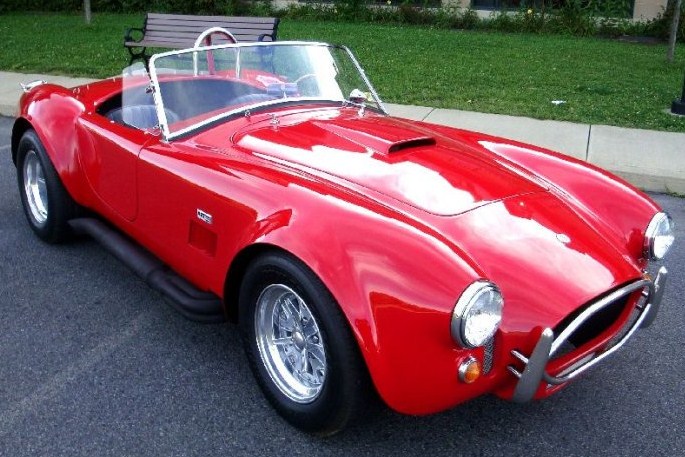
1967 AC Cobra
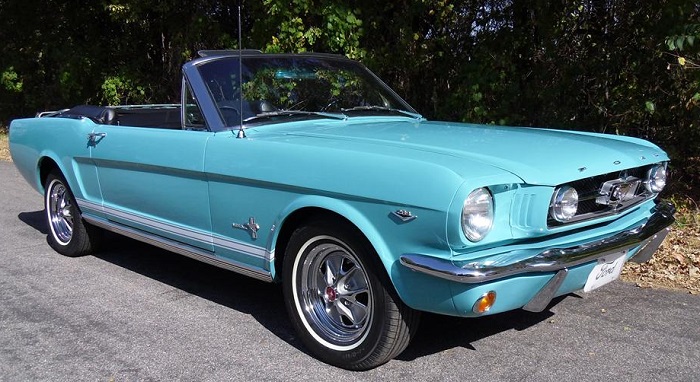
1965 Ford Mustang
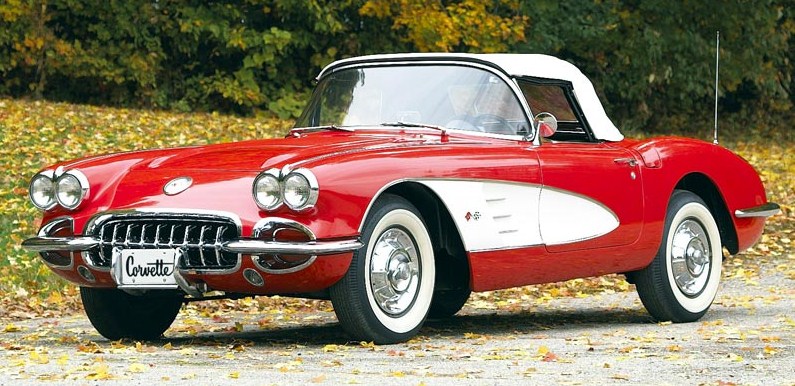
1963 Chevy Corvette C1
And the 3(a):
1956 Porsche 356 replica (w/ VW engine)
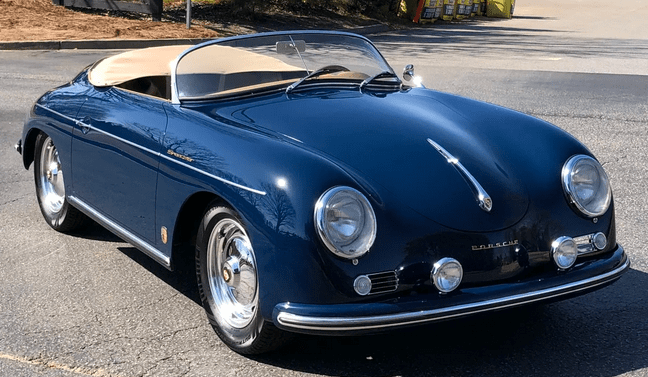
(I know, it’s furrin — but VW parts and spares are as common as GM stuff nowadays, and the simpler “crate” VW engines are practically bulletproof anyway.)
In the second category — we’re talking about post-SHTF survival here, where your vehicle might actually need to be able to do some work — here are my top 3 (plus non-Murkin) choices:
1966 Ford F100
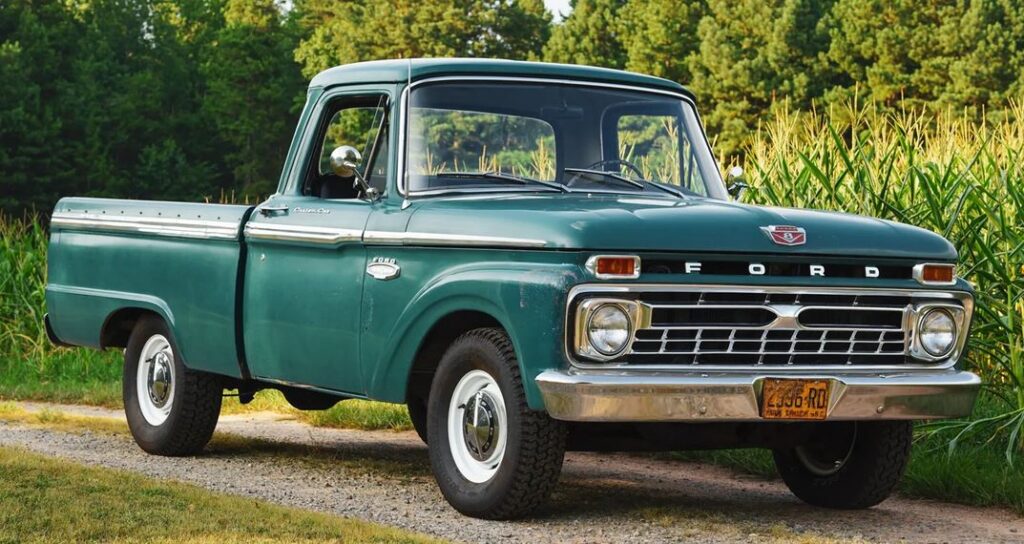
(I’ve always had a soft spot for these good ol’ boys, sue me.)
1948 Willys Jeep M38
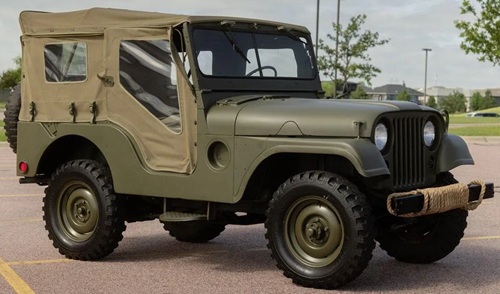
You can get one of these, fully restored without mods, for under $30k. Cool factor is off the charts, and transistors hadn’t even been invented back then.
1965 Chevy El Camino
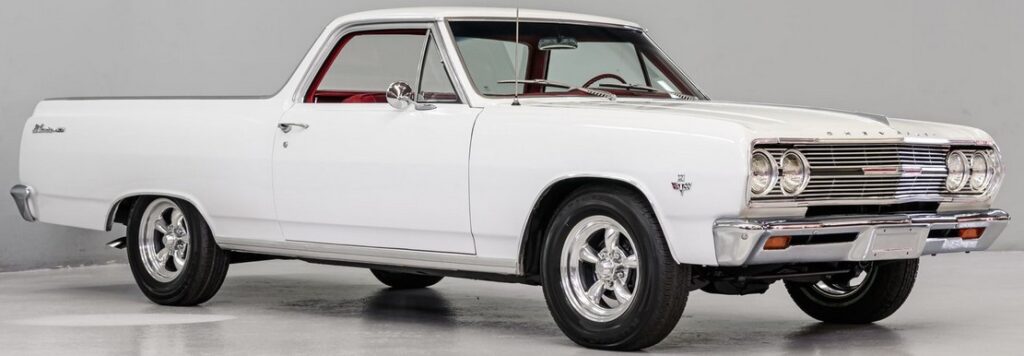
These are regarded as kinda déclassé nowadays, but I like them anyway.
And my not-so-token 3(a) Euro option:
1970 VW Panel Van
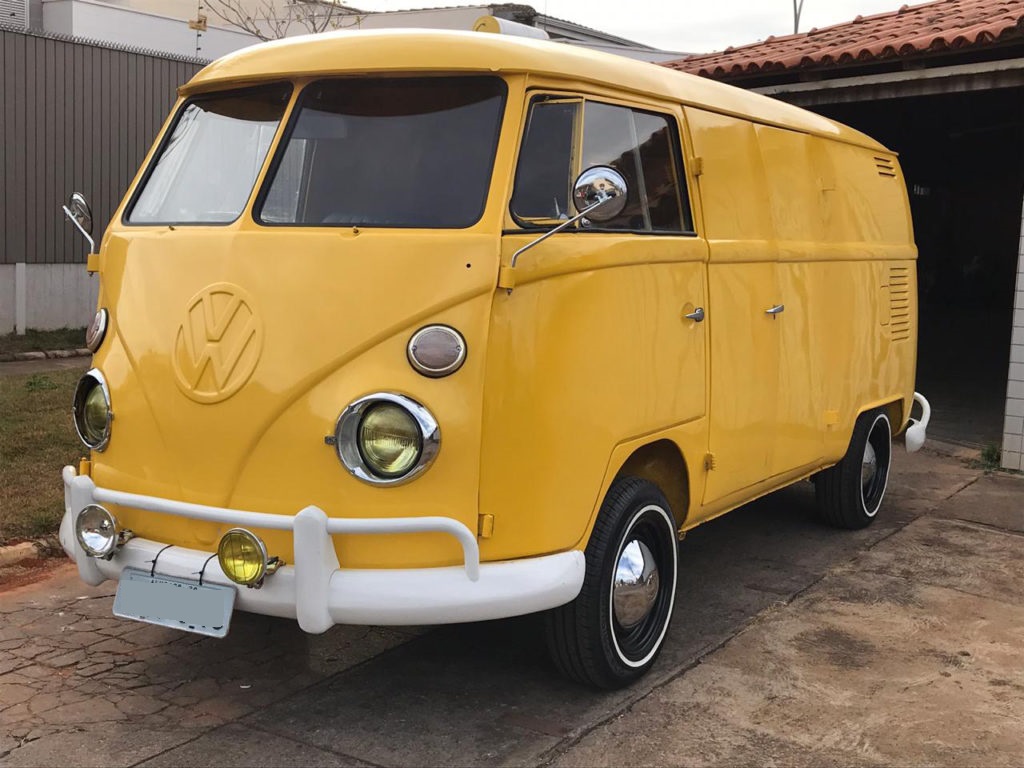
I’ve spoken before of “Fred”, my old Brazilian-made VW. It had no creature comfort fiddle-faddle, no seatbelts even, and it withstood the travails of carrying practically all our band gear and three passengers, without complaint, for over 170,000 miles. Had it not been thus punished, it might not even have needed a new clutch at 80,000.
It’s actually my #1 choice, over all the others, and if I could somehow resurrect Fred as taken off the showroom floor, I’d be the happiest man in Christendom. (I’d have to leave Texas, though, because no a/c…)
And an afterthought (3b):
1968 Toyota HiLux
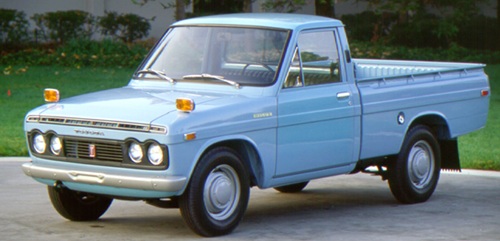
Argue with this choice, I dare ya.
Your ideas in Comments, please.
That is a 1958 Corvette. The 1963 coupe had the split rear window. My brother had a ’63. I always preferred the ’58.
Like I said, my knowledge of American cars of that era is scant to non-existent.
Whatever it’s labeled on the Internet, that’s what I go with.
For post-apocalypse, there’s little that can beat a horse or mule: none of those vehicles will work without fuel. The cart is optional.
Horses and mules need fuel also. When not out in the pasture grazing durring the non growing season they get fed Oats and water daily. We harvested the oats for our horses with a combine, which are now packed with electronics.
I dearly love to look at a well preserved F100 and even considered finding a good one. That is, right up until I looked rationally at the technology … drum brakes, no horsepower, primitive suspension, no A/C for god’s sake … this is Texas. The same applies to every car in those beautiful pics up above. By modern standards, the Mustang is practically undriveable, the Corvette is even worse, and a 356 is just ridiculous.
It turns out the window is very narrow between the advent of what we would call modern, but not electronic, and electronic enough to not be EMP survivable … Late 70’s, early 80’s depending. IIRC, 80’s era Dodge diesel trucks with mechanical injection were considered the prepper sweet spot for a while.
My ’78 Datsun 510 wagon might be the car I never should have let go.
How do you define “undriveable”? How many of these “undriveable” vehicles have you actually driven when their suspension and steering was not completely worn out?
You’re right, you have to have some point of comparison. As a measure, consider a racetrack where I have experience. On a track, a 1980 Honda Accord would beat every vehicle on that list, except the FauxBra, because of “modern” technology. I know we’re not going racing, but that’s one kind of driveability, reliability, performance that provides a point of comparison.
See comments by ltdavel, below, for an answer that I completely agree with. After teotwawki, you want a farm truck, not a race car. On that basis, the HiLux does beat all comers as our host suggests.
I’ll throw my two cents in, as someone who until recently drove a 60’s model vehicle in modern traffic. In an EOTWAWKI situation, that mid-60’s farm truck will be just fine. But driving it now, in modern traffic? No.
Traffic is different now than in the past. Much denser, much faster, much more intense. You’ll be driving around knowing that everyone around you can accelerate faster, STOP faster, and swerve faster. The STOP part is key, cause one minute I’m flying down the highway at 90 and the next people are slamming on the brakes. First, that farm truck will barely do 70 on a good day, and second you’ll slam a dozen different cars before you can stop.
So if you can 100% exclude any highway driving, any rush hour driving, maybe it’ll work as a daily driver. Otherwise you’re a wreck waiting to happen.
And I’d still kill for a mint mid-60’s F-100. But it’d be a toy, not a daily driver.
The more they overthink the pluming, the easier it is to stop up the drain. Keep it simple, stupid. On the other hand, I’m not completely averse to creature comforts. AC is a must for me here in New Mexico. And as a member of the microscopically small community of unrepentant jazz geeks, I’ve come to appreciate using the jazzradio.com ap in my current ride.
I’ll go with the Ford pickup. Those 300 cubic inch straight six engines run forever. Rebuild the brakes – who cares if they’re drums, you aren’t going to the racetrack – replace the clutch and pressure plate, new shocks, and repair/replace all of the rubber parts in the suspension. If you “can’t drive a stick” well learn.
With some simple modifications those o!d time trucks can run on alcohol and every country boy knows how to make that.
You used to see aftermarket air conditioning units hung under the dash on those old vehicles. I’ll bet that such things running on R134a are still available.
For more serious social work the Toyota is a good option . Don’t the beds and frames come pre drilled for mounting a Dishka or to keep with the American theme a Ma Deuce?
Make mine a 1952 Chevy 5 window truck with 4 sp and a 350 V8 all in brand new mint condition and you’ll never hear me complain. Oh yeah, candy apple root beer pearl pleez.
The 74 Corvette is the last year point/condenser was part of the ignition. I have a a pack of gofer matches, coil, and 2 sets of tune-up parts in a copper box in my gun safe as I have a Petronix electronic ignition conversion on my 74 Stingray. I can go back but filing and re-setting the points every 3k miles get old quick.
What I would like to do is find a second generation Bronco with a manual transmission. I would pull the engine and transmission an put a mechanical injector pump Cummins and TKO 5-speed in it.
I suppose I’d have to choose I’d go with my old ’74 911S with the Fuel Injection. That was a fully Mechanical Fuel Injection, which in the typical German solution was a box of punps, values, and gears with more small parts than a high end Swizz watch. ( and generally required some guy named Hans to keep it all running smoothly, a skill probably lost to time now ) )
A lot of electronics have been hardened against EMP. There isn’t as much RF noise as a result. The hardening works both ways.
Most kit car companies work with an engine supplier to make it easier. You simply order the full engine/Transmission package that matches the way your kit was configured. It’s pretty much plug and play. The days attempting to mate a used passenger car engine and transmission of questionable history to your Cobra Kit are long past. Of course that really doesn’t fix what your goal is since they all come with full modern Electonic engine management systems. I suppose you could retrofit an older Holley Carb, The new Holly Carbs have electronics) or sets of dual throat Webbers providing you could find the original mechanical ones. They make new ones that look like the old ones but they are electrocic.
Thanks for the mention!
The WW2 era Jeeps are fantastic and not that badly priced for a piece of history. The Dodge power wagons are rather under rated and you can haul more gear with them. I think they were designated the M57 or something.
Of course, that’s a 1960 Corvette, but the point still stands.
About a dozen or so years ago, I took a ’75 Jeep CJ body and frame and fitted an Isuzu C240 diesel engine (forklift and marine version) to it. This was actually a factory option back in the day, and there are plenty of these still running in the Philippines and Mexico, so parts were easy to come by. Upgraded the suspension, put a stake bed insert in the tub, added a winch and turned it into a great farm truck.
It will never win a speed contest, but it is a helluva stump puller. It will also run on just about anything. I’ve been reluctant to let it go, but my brother is giving it a good home on his farm in Missouri. It doesn’t even have a radio and aside from the battery, starter and related components, no engine electricals. Pretty spartan, but spartan works.
FWIW you can swap out the distributor on any small block chebbie that has the electronic ignition with an older points model. So most of the trucks in the 80s and 90s are in play here.
I’m doubting an emp is going to do much to a car that’s not running. All the tests I’ve seen are where the thing is running when they blast it.
If you’re worried about post-EMP vehicle usage remember that gasoline goes bad fast.
You’re going to want a diesel.
My understanding is that diesel goes bad too. I don’t know firsthand anything about it, but my dad died some years back with a diesel tank on his farm – fuel in it is 7 or 8 years old now. No one, and I mean no one, will touch it. My mom has offered it for free to everyone she knows and they are scared shitless to use diesel that old in their farm equipment. So there’s that. From people that farm for a living. If someone offered you several hundred gallons of fuel for free, wouldn’t you take it?
Gasoline lasts a few months with ethanol in it , maybe 2 years with Sta-bil. Diesel is good for 4ish years, and older diesel’s will run on straight veggie oil. Biodiesel is also not too difficult to make if you have prepared in advance.
So with that in mind, I’ll take a IDI Ford (pre-turbo). or Cummins diesel with a manual , before they went to computer control (98ish?)
1970-ish Chevy C/K, 300-ish V-8, A/T, A/C.
Am still driving my 2001 Silverado that I bought new, although not that much these days. It has electric windows. I knew the battery was on it’s last legs and was nursing it along. I also crack open the windows on hot summer days and then close them at night, which doesn’t help the battery. So went to close up the windows the other day, and nothin’ doing. Had to hook up the charger set on 6 amps to get them closed again.
So, I have installed a new battery, all is well. I have had very good luck with NAPA batteries. The last two have lasted 6+ years.
Took an engine rebuild class in junior college back in 1972. This was our text book. Still have it–
https://www.amazon.com/Engines-Electrical-Systems-Blanchard-Ritchen/dp/B000O6EBAK?Adv-Srch-Books-Submit.x=16&Adv-Srch-Books-Submit.y=16&dib=eyJ2IjoiMSJ9.RuiZSQcYJauZlaTBPkb4R_VK-9BFaDq9v3uxM1W9EuaZ5HEvX7evHtj-_jkRl96e4F5HT-0E0jxUu7h39gPI5pBKtbAAYvL3CtB37Xem1Rywq5BNgmA9WD5Bw5w14hylhiOtb7kPS4dPrjpae3U9FQ.I3cwmz8nSEFEJoJEhSMmqS1m5htw5lJYEmGmST3Ad40&dib_tag=se&qid=1751729864&refinements=p_28%3Aauto+engines+and+electrical+systems&s=books&sr=1-3&unfiltered=1
Interesting, I have that HiLux (a 1970 in that blue color) that I put an 18R twin cam into back in the 80’s, along with a 5-spd and front disc brakes – it just needs a serviceable bed. Have to just keep searching the junk yards here in rural NV – something will turn up.
Dunno that I would pick any one thing. I kind of like the idea of a mule, except it cant bred and 10 years down the road you would be back to shanks mare. Although anything lasting more than 5 years would probably engage my expiration date. As far as mechanics go I can and have run everything with tires, or treads you could want to use. So I would just look for something. Not to picky about what.
Sorry, Kim, for once we disagree. I’d quite happily have any of those dinosaurs as a toy, but for practical purposes forget it. Just no.
I’m not giving up ABS brakes. Traction control. Functioning A/C. Mechanical and electrical reliability. Advanced crash protection. Seatbelts. Survivability. Rust proofing. And so on.
Back in the 70s every petrol station had a garage. Remember? Next door was a panel beater. Because they broke and crashed with great frequency.
No, no, no no. I’ll stick to my “App with wheels” thank you very much…
Methinks you missed a key part of the discussion, these are the cars for post EMP nuclear airburst exchange between warring nations. Basically everything with modern electronics will be dead. The 16 and 12 gauge wire going between magnetic only devices may survive, hence old vehicles without any electronics become golden, assuming there is still gasoline or diesel available. My 64 Mercedes W111 fintail will run under such conditions, my 2005 VW Diesel likely will not. Wish I had not sold my W124 Mercedes diesel, mechanical injection would survive as well but not so sure about the transmission. Going to have to search for a manual shift pre1970 diesel for my fleet.
My 1991 1HD-T powered 80 series Landcruiser has mechanical fuel injection – which is why I bought that year and not one of the later years. Electronics are the radio, I pulled the aircon to fit an engine mounted compressor.
It’s still quick enough for me, long and comfortable enough for long trips and excellent off road – not to mention worth $5-8k more than I paid for it 7 years ago.
Early 80’s Mitsubishi B2200 pickups with the 2.2L 4cyl NA diesel with a 5spd trans. 42mpg freeway.
Industrial engine. Built like a big rig engine, with similar life expectancy. 57-59 hp.
Ford and Dodge had the same engine in similar size pickups, but the Ford Ranger was notably heavier, and typically had a 4spd as standard, so fuel mileage suffered. Some 4×4 versions were available.
Ford and Dodge replaced this engine with a 2.3L turbo diesel, but it was fragile, and only expect it to go 100k miles before it broke, and not be fixable.