Why, Indeed?

When it comes to disemboweling a government agency, it’s really hard to beat Matt Taibbi’s take on the CIA:

Before Trump was even a Republican nominee, a CIA Director relayed “concerns” to the FBI that “served as the basis” for years of grueling investigation that would paralyze his presidency; after his election, as we’ve learned all summer, CIA then cooked up a bogus intelligence report saying Trump won with Russian help; CIA leaked its balls off to papers like the New York Times about how Moscow worked to “install” Trump in the White House; CIA helped topple Trump National Security Adviser Michael Flynn by telling every reporter on earth he was a “clown” who said mean things about the CIA and secretly conspired with Russia; CIA warned foreign countries not to share intelligence with Trump because Russia held “leverages of pressure” on him; CIA stuck fictional campaign research about “compromising personal and financial information” Russia had in a report that was leaked to CNN in less time than it takes for fleas to mate; CIA accused Trump of treason; CIA got Trump impeached; CIA leaked stories that Trump let Russians kill Americans for sport; CIA banded together to call a true Hunter Biden story a Russian influence operation; CIA spent the last half-century overturning foreign governments and in this one is trying do the same at home, in such blatant violation of its charter that 77 million people last year voted to have it shot like a lame horse… But sure, yes, let’s make sure the CIA is at the President’s side when we’re trying to negotiate a peace settlement. What could go wrong?

Yeah, those days of relying on the “experts” in government agencies — any of them — are as gone as last year’s flatulence.

Bad Optics

…or “not a good look”, as people used to say.

While slouching through the usual dreck on Teh Intarwebz the other day, I came upon an article which was a thinly-veiled sales schtick for this charmingly-named self-help book:

In fairness, there was an asterisk placed strategically to bowdlerize the Bad Word, but I hate them because I’m not interested in having to slow my reading down to decipher Rosetta Stone-type glyphs inserted into words to prevent people with delicate sensibilities from assuming the principal characteristic of fainting goats.

But that’s not what I wanted to talk about.  This is.

Underneath the book cover was a pic of the author:

…no doubt, he took up his legal career after a stint in the Merchant Navy, or, as his name implies, after realizing that grave-digging didn’t have good prospects what with this Kubota stuff becoming all the rage in modern cemetery operations.

Now I’m somewhat famous for hating the way that people dress in the modern, oh-so casual world (to say nothing of body art), and I’m sure that this publicity pic Sexton has chosen must appeal to love-starved women seeking a way out from their joyless marital unions.

And I know that very few lawyers nowadays go to the office looking like Harvey Specter from the Suits  TV show (more’s the pity).

But seriously?

Sorry, but I can’t take “high stakes” as a description for a lawyer with full sleeve tattoos, in a pic.  For Mike Tyson and his ilk, hell yeah.  For a lawyer?  No.

Come back Harvey, all is forgiven.

Monday Funnies

“The hell with Monday.  I’m not going out.”

And from the classics:

And in the same spirit:

And while we’re there:

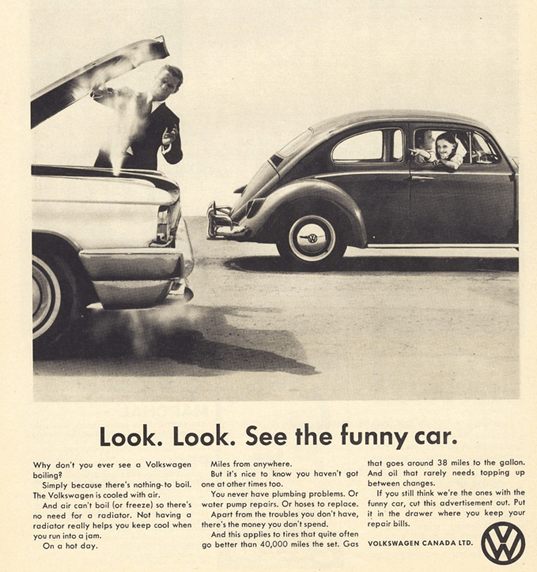
So going back to our very first pic, let’s look for an alternative:

Be careful out there.

Classic Beauty: Stefania Sandrelli

Lessee… win a beauty competition at age 15, get your first starring movie role a year later  — playing the lover of Marcello Mastroianni. no less — and go on to become a legend in Italian comedy during the 1960s.

That’s Stefania Sandrelli for you.  And here she is, first in grainy black & white:

…and then in glorious Technicolor (or whatever they called it in Italy back then):

Have mercy.

Gear Questions

Over the past year or so, several Readers have written to me to ask what kind of gear I used back in my callow yoof when I were a full-time (and later gig) bass guitarist.

Like many musicians, I used several different rigs over the ten or so years thus employed, so let me give the historical timeline thereof.  (Non-musicians or disinterested Readers may scroll down or ignore this post, as wished, because I’m going to get a little geeky.)

My first bass guitar wasn’t actually mine, but borrowed from a friend so I could play my first pro gig in a dinner-dance trio.  Yup, step forward the Hofner 500 “Beatle” bass:

In retrospect, the Hofner was a perfect “starter” bass guitar:  light, 3/4 scale neck and fretboard, and sounded pretty good for the time — and really good for the old jazz/dance standard ballads I was playing.

The amplifier was a homemade (not by me) rig, a small 60-watt amp top perched on a massive cabinet containing two 12″ bass speakers, that I purchased for the equivalent of $50 in today’s currency.

Then I bought my own bass guitar, a red Fender Mustang:

It’s basically a 3/4-scale Fender Precision, because at the time I (mistakenly) thought that my fingers weren’t long enough to stretch between frets.  It sounded okay, but to my ears it just didn’t have a distinctive tone.

At more or less the same time, I bought a proper amp, a 100-watt Fender Bassman with a huge cabinet containing four 12″ speakers:

This amp I kept for several years, only replacing it when we transitioned from club work to gigging;  even my VW panel van struggled to contain it and all the other gear we schlepped around.  (Why such a big, loud amp?  In those days, affordable PA systems weren’t that powerful — our little Dynacord was only 80 watts — and the PA speakers likewise weren’t robust enough to handle bass guitar input.)

Very soon after that, I traded in the Mustang on a new guitar, and it’s all the result of me hearing Yes bassist Chris Squire for the first time.  Yup, step forward the Rickenbacker 4001S (stereo):

I never played another bass guitar, ever.  The sound was matchless and distinctive, and only my lack of skill stopped me from sounding as good as Squire (okay, not many could play like Chris Squire, but whatever). It was a heavy beast — weighed more than my Army-issued FN-FAL, in fact — but the sound was so glorious I didn’t care and endured the nightly muscle pain stoically.  Unless playing softer “standards”, I always used both pickups (toggle switch in the middle position), with volume, bass and treble turned all the way up.  (The only time I ever turned the guitar’s volume output down was in the recording studio, because few desks of the time could handle the Rickenbacker’s thunderous output level.)

One time I was having the Rick re-fretted, and played a loaner (I think a Kramer) for a single gig.  After the second set, one of the guys asked:  “So Kim… when are you getting the Rick back?”  It was that special, and I love it still, even though I left it behind with the band before the Great Wetback Episode of 1986 and have no idea what happened to it.

Anyway, I next replaced the massive Fender Bassman with a Roland Studio Bass 100w and its single 15″ speaker, because it was half the size of the Fender and had a lot more versatility, I thought.

Of course, the amp had far more features than I needed — unlike lead guitarists, who can tinker around with amp controls ad nauseam, I had little patience for all that.  (Find a setting I like, then plug in the guitar and go, never touching the knobs again.)

So when an opportunity came along to get a smaller but still-more powerful amp, I snapped at the opportunity and swapped it for my favorite amp of all time, the Roland RB-120 double stack.  (I cannot find a pic anywhere of the stack, so content yourself with this:


…and below is the way I played it about 90% of the time at gigs — I only used the double-stack when the venue required MOAR BASS, e.g. at outdoor shows and concerts.

Longtime Readers will by now be familiar with my penchant for simplicity, in all things.  In fact, while the RB amp had three tone buttons (#1: heavy bass, #3: heavy treble and #2 combo), I only ever used the #2 button, with both tone knobs permanently set to 10.  Volume?  Never above 2.5 – 3, because any louder and the windows shattered.  Seriously.  If I set the volume to 4, I could place a bar table on an empty dance floor and move the thing all the away off the floor in the space of three songs.  (Did I ever use any kind of hearing protection?  Silly rabbit;  which is why I now have near-terminal tinnitus.)

The only time I ever fiddled with the sound of my rig was if the room’s acoustics were completely wonky — in which case I used a 10-band graphic equalizer pedal like this one:


(It was actually a Yamaha, but I can’t find any pics of it because I think they stopped making them in 1980.)  Even then, I would only fiddle with it for a few seconds until the sound was okay.

Along the way, I played through a number of other amps, but only when I was standing in for an indisposed or missing bassist in another band.  The one I remember the most was at the Las Vegas nightclub in Bulawayo (in then-Rhodesia) with a band called Kelly Green, where I played for a couple of months through a lovely Orange with twin 15″ speakers in a reflex cabinet:

  (LOUD AF, but I still preferred my RB-120)

Also, at some other gig I remember using (and hating) a Marshall Super Bass 200-watt amp stack (back when Marshall still made the things).

All the power in the world, but none of the tone I liked.

Anyway, thank you all for accompanying me on my trip down Memory Lane (while my age-befuddled brain can still actually take me there, that is).


(with Army band Hogwash, 1978.  Eighteen months of daily practice with those guys turned me from “unskilled but enthusiastic” to “reasonably competent”.)

It was the best time of my life, and I’d go back to it in a heartbeat.

Late Breaking News

Combat Controller and I will be at the Fort Worth Gun Show tomorrow (Saturday 8/23) and Sunday 8/24, selling the guns and such from the estate of the late and much-missed Layabout Sailor.

There are several guns — too many to list here, but a couple are worth mentioning for their value either as hunter’s or collector’s pieces.

Cream of the crop is a Norwegian Krag-Jorgensen in 6.5x55mm Swede:

Second is a Ruger Hawkeye African, also in 6.5x55mm (like me, Jim was a huge fan of the Swede):


(does not include the NightForce scope;  double the price for the whole package)

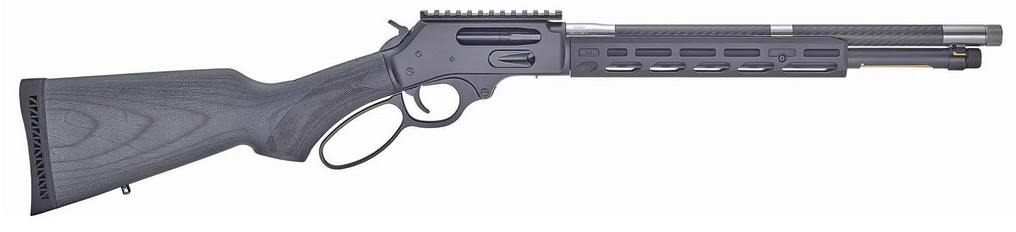
Third is a pre-’64 Winchester Mod 88 lever rifle, in .308 Win:

Fourth is a Parker-Hale Safari Deluxe, also in .308 Win:

And fifth is a T/C Compass in 6.5 Creedmoor:

My apologies for the lateness of the notice, but our table only became available this morning.

(Also, print out this post and bring it along to receive special prices on either the above guns or on ammo, lots of ammo!)

See y’all there.