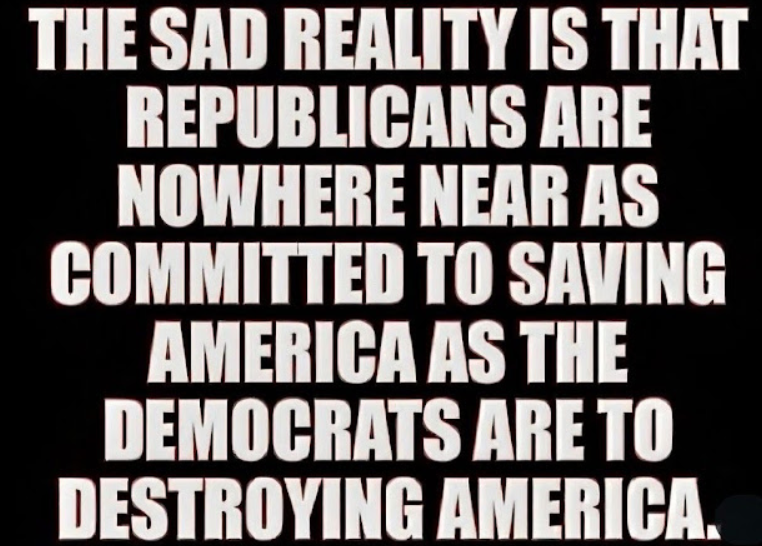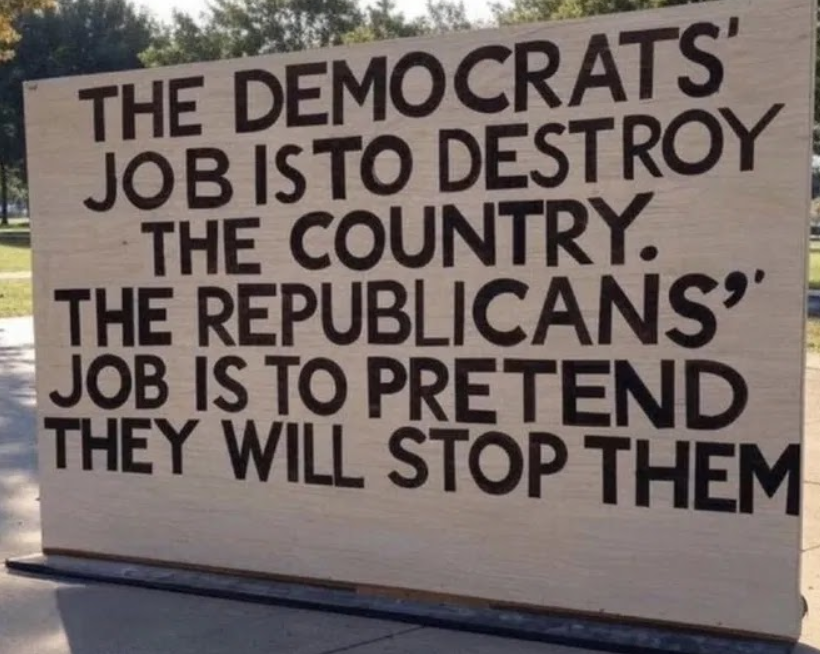
Never Stopped

Via Insty, this happy tale:

You probably know the feeling — you’re in the mood to watch a movie, so you open up Netflix. The next thing you know, two hours have passed, and you still haven’t decided what to watch. Even when I go on a streaming platform, knowing what I’m looking for, it’s easy to get distracted by a homepage flooded with endless recommendations. Eventually, it starts to feel overwhelming and all that content just blurs together into one giant, forgettable backlog.

That’s why I’ve started buying CDs and DVDs again. I recently revived some old PC setups, so I thought it was time to try taking a similar trip back in time with my music and movies. What started as a passing interest in physical media ended up highlighting everything I’m missing out on with streaming.

And the rest, as they say, was history.  It’s a lovely story, so haste ye thither and peruse the thing in its entirety.

Longtime Readers will know full well that I’ve never stopped doing that.  I’ve always had a large collection of DVDs and CDs on hand, precisely for the reasons stated in the article.  Only the recent move by media companies [spit]  towards sunsetting access and availability — not to mention editing the original releases into something… well, less — has reaffirmed my preference toward ownership over subscription.

So to all those — Olde Pharttes, Gen X, Millennials, Gen Z, whatever — who decide to make a similar lifestyle decision:  welcome to the club.

It’s a decision you will never regret.

Just. Go. Away.

…and I only used that title because my original thought (“Just. Fuck. Off.”) may have been judged as a little intemperate.

Once more unto the hysterical breach, my friends:

The planet is grappling with a “new reality” as it reaches the first in a series of catastrophic and potentially irreversible climate tipping points: the widespread death of coral reefs, according to a landmark report produced by 160 scientists across the world.

As humans burn fossil fuels and ratchet up temperatures, it’s already driving more severe heat waves, floods, droughts, and wildfires. But there are even bigger impacts on the horizon. Climate change may also be pushing Earth’s crucial systems — from the Amazon rainforest to polar ice sheets — so far out of balance they collapse, sending catastrophic ripples across the planet.

“We are rapidly approaching multiple Earth system tipping points that could transform our world, with devastating consequences for people and nature,” said Tim Lenton, a professor at the Global Systems Institute at the University of Exeter and an author of the report published Sunday.

In other words:

Sorry, but nobody with any form of humanoid brain should give any credence to these hysterical “Do this NOW or we’re all gonna dieeeeeee!”  doomsayings anymore.

In the first place, “climate change” is not the major consequence of human activity.  Considering that almost every “landmark study” — from Mann’s infamous (and debunked) “hockey stick” graph onwards — has been based on flawed, incorrect or fraudulent data manipulation, not least in predictive climate models, there is no reason to suggest that there is anything we as humans can do to somehow affect any form of climate change, let alone reverse it.  (Even assuming that mankind — and I’m looking at you, China and the other Third World nations — can actually act in concert, the entire activity could be reversed simply by the Sun doing one thing instead of another.)

In other words, there are greater forces in play here, and it doesn’t appear that people can do anything to affect them, even if they wanted to — and that’s a big if.  Try telling the people who own these seafront properties in Hawaii, for example, to abandon them because the properties’ existence may be harming the offshore reefs:

They’ll tell you to fuck right off, and I can’t say I blame them.

Now tell China and India to stop the pollutant-heavy flow of the Yangtze and Ganges rivers (to name but two) into the ocean, and the response will be “fuck right off, squared“.

As for the statement:  “…multiple Earth system tipping points that could transform our world, with devastating consequences for people and nature”, what’s happening here is the old extension of Murphy’s Law (If something can go wrong, it will) which states:  “If a number of things can go wrong, they will either go wrong simultaneously or else in the order best designed to create the maximum damage.”

It’s a humorous take on failure, but like “strange women lying in ponds distributing swords” is not a good basis for government, basing ecological policy on Murphy’s Extended Law is just as foolish.

Of course, the greater the preponderance of factors pointing to massive failure, the greater the need for panic and precipitous action to prevent it.  Hence the grouping of ocean current weakening, coral reef disintegration and cataclysmic weather events into one Great Big Disaster.  (They left Donald Trump out of the list of calamities, but that’s probably just an oversight.)

Sorry, but we’ve seen, and recently, the dolorous consequences of precipitous, fear-driven action as a response to perceived calamity (#Covid).  The same attitude (“we won’t be fooled again”) should apply equally to these climate loons’ dire predictions.


By the way:  if you really want to worry about something occurring in nature, try this one.  And there’s not a single thing we can do about it.  Not even selling our evil SUVs or eliminating plastics.

Random Totty

Okay, I’d never heard of Brit actress-totty Olivia Cooke before, had never seen any of her movies and to be frank wouldn’t recognize her if I tripped over her in the street.  But the now-30-year-old seems to have appeared in dozens of movies and TV shows, so mea culpa  (and not for the first time) for not having acknowledged her existence before.  Anyway, to add to the confusion, she seems to be either a brunette or a redhead, so there’s that:

Actual Conspiracy

I’m not by nature a conspiracy theorist, until there’s proof — usually after the fact — that there really was a conspiracy.  Then I go, “I thought there was something going on.”  But I keep shtum as a matter of policy, because guys who find links between JFK’s assassination and Aristotle Onassis’s manipulation of the emerald trade in China (I swear, I once read such a piece SOTI)… well, really.

So last week the Brits discovered beyond all doubt that two actual spies were working for the Chicom government, and arrested them.  Then, mysteriously, “pressure was brought to bear” and all charges were dropped.

So read here about the Circle of 48, which explains the dismissal of the charges.  (Spoiler alert:  it happened because prosecution “would have angered the Chinese government”.)

And think about whether such a group exists here in the U.S.  It’s not so much a dotted line as it is a neon arrow.  We saw evidence of it before with the fake “Russian dossier” and the people within government who prepared it, used fake information to make it legal, leaked it to the press and tried to stymie a completely valid election.  And I’ll bet there are more being cooked up, as we speak.  You may suggest your own suspects as the dramatis personae  (people like that slimy little Brit Jonathan Powell, only with American accents).

Feel free to point out where I’m wrong.

Good Question

From the comments to yesterday’s post about A.I., this from Reader askeptic:

“I seem to recall being taught oh-so-long-ago, that every advance in technology has brought an expansion of employment, contrary to the accepted knowledge as machine replaced man. Why would not the use of A-I be an exception to that?”

Simple answer would be that machines have always worked perfectly (after improvement) in doing repetitive tasks — assembly-line activity, mathematical calculations, full-automatic shooting and so on.

What humans do is think:  about building robots to work on assembly lines, the calculations to be performed, and the need for massed fire, to supply answers for all three activities, in other words.

What seems to be getting people alarmed — and I’m one of them — is that A.I. seems to be aimed at either duplicating or indeed creating those thought processes, replacing humans in the one dimension that has created this world we live in.  (My special reservation, shared by many I suspect, is that the engine of this replacement seems to be relying on the wisdom of crowds — i.e. garnering information from previously-created content, much as philosophers have relied upon Aristotle et al. to provide the foundations of their further philosophies.)

The problem with all this is that just as Aristotle’s thoughts have sometimes proved erroneous in dealing with specific scenarios, the “wisdom of crowds” — in this particular set of circumstances — can be reshaped and reformed by the applications of millions upon millions of bots (say) which can alter the terms of the discussion by making outlying or minority positions seem like the majority, in the same way that a dishonest poll (such as the 2020 U.S. election) can be corrupted into portraying a preponderance that never existed.

It’s easy to refute one of Plato’s scientific observations — e.g. that heavier objects fall faster than light ones — but it’s far less easy to refute the inadequacy of facial masks to prevent the spread of airborne disease when the preponderance of scientific “evidence” allows people to say that if you refuse to wear a mask you’re a potential mass murderer.  We all knew intuitively that the tiny gaps in masks’ weaving were still huge compared to the microscopic size of plague viruses, but that intuition was crushed by the weight of public pressure.

And if A.I. only looked at the part of the data that said that masks work and never looked at the evidence that they didn’t, the output would always be:  wear a mask, peasant.  And yes, that is indeed happening.

I know the above is somewhat simplistic, but my point is that when you look at how A.I. is being used (to “cheat” creative activity, for example, in writing a college essay) and the potential that A.I. can learn from its mistakes (even if driven by erroneous input), that we are justified in being very apprehensive about it.

Which brings me finally to the answer to Reader askeptic’s question:  the premise is sound, in that technology has in the past always led to an expansion of employment.  But if we acknowledge that the prime function of a human being is to think, then what price humans if that function is replaced?