Not Surprising

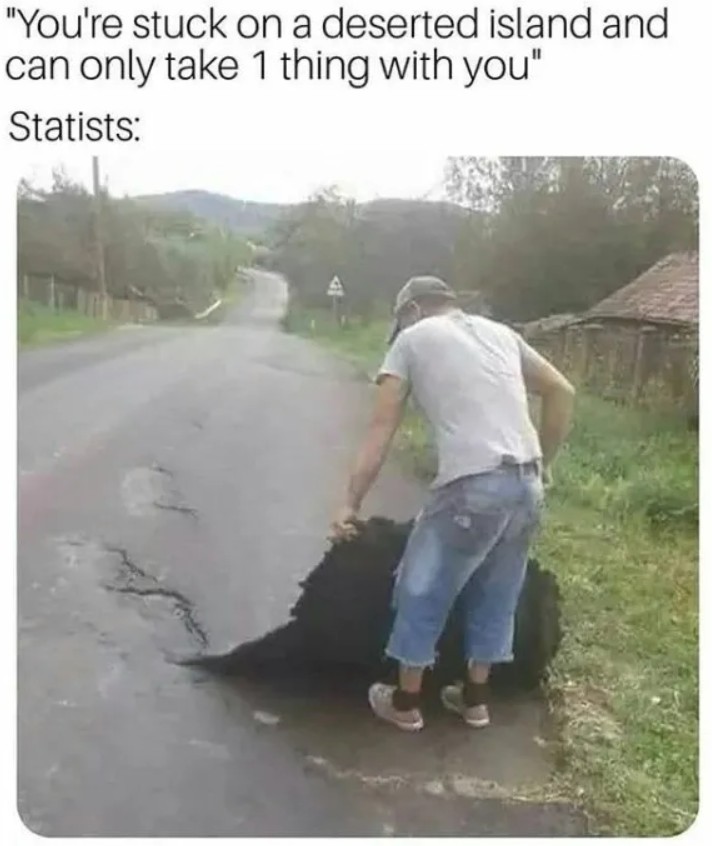
This report supports something I’ve been talking about for a while:

Major AI chatbots like ChatGPT struggle to distinguish between belief and fact, fueling concerns about their propensity to spread misinformation, per a dystopian paper in the journal Nature Machine Intelligence.

“Most models lack a robust understanding of the factive nature of knowledge — that knowledge inherently requires truth,” read the study, which was conducted by researchers at Stanford University.

They found this has worrying ramifications given the tech’s increased omnipresence in sectors from law to medicine, where the ability to differentiate “fact from fiction, becomes imperative,” per the paper.

“Failure to make such distinctions can mislead diagnoses, distort judicial judgments and amplify misinformation,” the researchers noted.

From a philosophical perspective, I have been extremely skeptical about A.I. from the very beginning.  To me, the basic premise of the whole thing has a shaky premise:  that what’s been written — and collated — online can form the basis for informed decisionmaking, and the stupid rush by corporations to adopt anything and everything A.I. (e.g. to lower salary costs by replacing humans with A.I.) threatens to undermine both our economic and social structures.

I have no real problem with A.I. being used for fluffy activities — PR releases and “academic” literary studies being examples, and more fool the users thereof — but I view with extreme concern the use of said “intelligence” to form real-life applications, particularly when the outcomes can be exceedingly harmful (and the examples of law and medicine quoted above are but two areas of great concern).  Everyone should be worried about this, but it seems that few are — because A.I. is being seen as the Next Big Thing, like the Internet was regarded during the 1990s.

Anyone remember how that turned out?

Which leads me to the next caveat:  the huge growth of investment in A.I. is exactly the same as the dotcom bubble of the 1990s.  Then, nobody seemed to care about such mundane issues as “return on investment” because all the Smart Money seemed to think that there was profit in them thar hills somewhere, we just didn’t know where.

Sound familiar in the A.I. context?

Here’s where things get interesting.  In the mid-to-late 1990s, I was managing my own IRA account, and my ROI was astounding:  from memory, it was something like 35% per annum for about six or seven years (admittedly, off an extremely small startup base;  we’re talking single-figure thousands here).  But towards the end of the 1990s, I started to feel a sense of unease about the whole thing, and in mid-1999, I pulled out of every tech stock and went to cash.

The bubble popped in early 2000.  When I analyzed the potential effect on my stock portfolio, I would have lost almost everything I’d invested in tech stocks, and only been kept afloat by a few investments in retail companies — small regional banks and pharmacy chains.  I was saved only by that feeling of unease, that nagging feeling that the dotcom thing was getting too good to be true.

Even though I have no investment in A.I. today — for the most obvious of reasons, i.e. poverty — and I’m looking at the thing as a spectator rather than as a participant, I’m starting to get that same feeling in my gut as I did in 1999.

And I’m not the only one.

Michael Burry, who famously shorted the US housing market before its collapse in 2008, has bet over $1 billion that the share prices of AI chipmaker Nvidia and software company Palantir will fall — making a similar play, in other words, on the prediction that the AI industry will collapse.

According to the Securities and Exchange Commission filings, his fund, Scion Asset Management, bought $187.6 million in puts on Nvidia and $912 million in puts on Palantir.

Burry similarly made a long-term $1 billion bet from 2005 onwards against the US mortgage market, anticipating its collapse. His fund rose a whopping 489 percent when the market did subsequently fall apart in 2008.

It’s a major vote of no confidence in the AI industry, highlighting growing concerns that the sector is growing into an enormous bubble that could take the US economy with it if it were to lead to a crash.

In the late 2000s, by the way, anyone with a brain could see that the housing bubble, based on indiscriminate loans to unqualified buyers, was doomed to end bad badly;  yet people continued to think that the growth in the housing market was both infinite and sound (in today’s parlance, that overused word “sustainable”).  Of course it wasn’t, and guys like Burry made, as noted above, billions upon its collapse.

I see no essential difference between the dotcom, real estate and A.I. bubbles.

The difference between the first two and the third, however, is the gigantic financial upfront investment that A.I. requires in electrical supply in order for the thing to work properly, or even at all.  That capacity just isn’t there, hence the scramble for companies like Microsoft to create the capacity by, for example, investing in nuclear power generation facilities — at no small cost — in order to feed A.I.’s seemingly insatiable demand for processing power.

This is not going to end well.

But from my perspective, that’s not a bad thing because at the heart of the matter, I think that A.I. is a bridge too far in the human condition — and believe me, despite all my grumblings about the unseemly growth of technology in running our day-to-day lives, I’m no Luddite.

I just try to keep a healthy distinction between fact and fantasy.

Thursday Landscapes

Small town in Bavaria, 2007

Just a little town off the autobahn south of Nuremberg en route to Passau and Vienna, with an unremarkable restaurant that served an exquisite German lunch.  No wonder it was packed.

I’ve spent a lot of time traveling around the small towns of southern Germany and northern Austria, and I’d like to do a lot more — a whole lot more.  In fact, I could easily spend a few months doing just that:  driving aimlessly around, stopping for meals, or a snack, or to see something of interest.

Quote Of The Day

From Will Dabbs (via national treasure Joe Huffman):

After the 1996 Port Arthur massacre, the Australian government outlawed most guns, confiscating some 650,000 firearms. Gun control enthusiasts often look lustfully at our friends Down Under as role models.

That’s the background.  Here’s the QOTD:

Even in a slow year, we gun-crazy Yanks buy that many new firearms every two weeks.

And those are just the guns reported as sold.  There may be still more…

Just Don’t Come Back

Here’s a trend that I’m completely behind:

Ellen DeGeneres and her wife Portia de Rossi made a quick exit after Trump’s election victory and vowed to never return.

Ryan Gosling and his wife Eva Mendes also made the move alongside America Ferrera, who fled the US in search of the ‘best opportunities’ for her children in the UK.

Courtney Love and Minnie Driver have also made the move across the Atlantic since the election last year. [Driver is a Brit, so she doesn’t count.]

And of course there’s Rosie O’Donnell, who ended up in Northern Ireland.

The latest?

George Lucas has bought a huge £40 million mansion in London, joining a number of American liberal celebrities fleeing the US.

In what is likely to be one of the biggest residential buys in the UK this year, the Star Wars creator is set to move to St John’s Wood.

Yeah well fuck ’em all.  The more of these assholes who GTFO, the purer the air Over Here becomes.

What’s going to be really interesting is when these “Trump refugees” come face to face with Britishland’s problems:  skyrocketing crime, illegal immigrant flooding and, should they stay there long enough, HM’s voracious taxes.

Have fun Over There, assholes, and good bloody riddance.

Stopping The Slide

We’re all familiar with the “slippery slide’ argument when it comes to laws and social policies (a.k.a. the “camel’s nose under the tent” expression).

Yesterday in Texas we went to the polls to vote on a series of propositions that either change or underline the Texas constitution.

The one proposition was that in order to vote in the state of Texas, you have to be a U.S. citizen.  Now one might think that that is understood to be the case — except of course when shit-holes like Boston or San Francisco allow non-citizens to vote on “local “matters.

Well, that ain’t gonna happen in the Lone Star State, should our local shit-holes (like Austin) start getting any ideas.  Best of all, of course, is that by making it a constitutional issue, Texas has the right to demand that voters show proof of citizenship before being allowed to vote.  (With my very non-Texas accent, I always take my passport with me to the polls, just in case.  Of course, I do have my voter’s card and driver’s license, and I’m on the voting roll anyway, but I have absolutely no problem with producing my U.S. passport if anyone wants to see it.)  This is not an issue to mess around with, and I’m glad we’re going all hardass on the topic. [Update:  it passed, 75-%25%.]

All the other propositions / amendments had to do with taxes, and when doing my research on each of them, I grinned broadly because they seemed to fall into two camps:  “This tax is bullshit and it needs to be whacked” — e.g. that farmers have to pay a tax on animal feed.  There were a few like that.

The other group of propositions are all preventative in nature, because unlike the U.S. Constitution, a product of the Enlightenment, the Texas constitution is very much proscriptive as well, i.e. we’re not going to trust the government to abide by goodwill alone:  the damn government isn’t allowed to do this or that specific thing — in fact, a whole lot of specific things.

My favorite?  The one that bans any kind of estate tax — okay, a “death” tax.

“But Kim… Texas doesn’t have a death tax.”

Quite right.  And now that it’s expressly forbidden by our state constitution, there’s never going to be a death tax in Texas.

I voted in favor of all the propositions.

And by the way, I thought that the polls weren’t going to be too busy.  In fact, the line of waiting voters was well over 200 yards long, and it never fell below that in all the time I was there.  [Update:  all the results are here.  The margins are about what you expect.]

We take this “restricting government” thing very seriously here, deep in the heart of