More Gubernatorial Ass-Kicking

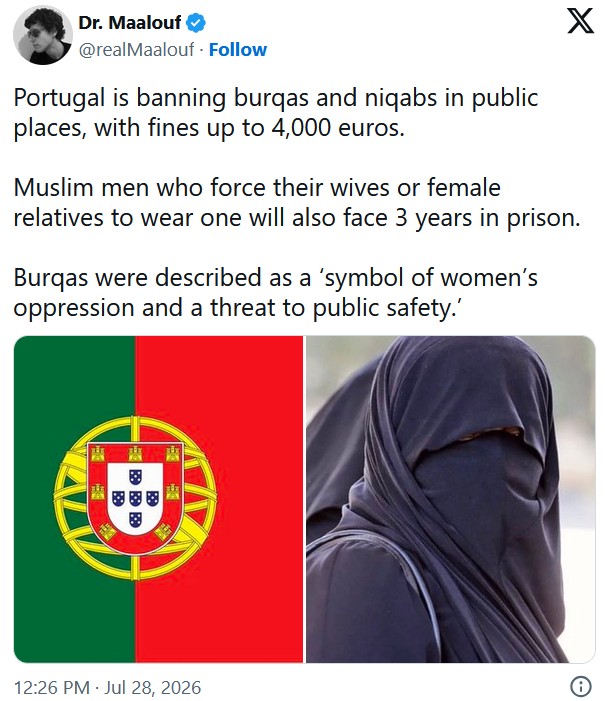
I really like this trend (if it is indeed a trend):

The Kansas State Legislature overrode Governor Laura Kelly’s veto of a bill named in honor of assassinated political commentator Charlie Kirk that strengthens free speech protections on college campuses.

House Bill 2333 received two-thirds support in both chambers this month, overruling the governor’s objection. 

Part of the bill, known as the Kansas Intellectual Rights and Knowledge Act or KIRK Act, protects “expressive activities.” It deems outdoor areas “public forums for the campus community.”

“Any individual who wishes to engage in non-commercial expressive activity on campus shall be permitted to do so freely, so long as the individual’s conduct is lawful and does not materially and substantially disrupt the functioning of the postsecondary educational institution,” the act states. 

Here’s the reason for the veto:

Gov. Kelly argued the bill was unnecessary as free speech is already protected.

Yeah, just like the right to own guns is “already” protected by the Second Amendment — except where it isn’t, in states like California, New York, Illinois and other Blue shitholes.

I hate the fact that we need additional laws to underline the freedoms already supposedly guaranteed by the Constitution (like this KIRK law and the USSC’s Gruen decision);  but these are the times we live in, sadly.

And it’s safe to say that it should be so unlikely that the KIRK law should be necessary on, of all places, college campuses — except that it’s in these very institutions where free speech is most threatened, whether at the hands of radical Left students’ “counter-protests” or at the hands of radical Left college administrations.

Let’s have more KIRK laws, then, and more veto overrides of this nature.

Suspension Of Privilege

To be honest, the airline industry has never been one of my favorite institutions, because they (along with modern automotive corporations) have discovered that their business is really a commodity service — therefore with the concomitant low operating margins — and like the car people, are finding evermore-devious and unscrupulous ways to fleece and gouge money from their hapless customers.

However:  I see that Delta has suspended their practice of privileged treatment for members of Congress, to which I can only say:  good.  Leave aside for the moment that politicians should never have any kind of privileged treatment or service given to them in the first place — they get more than enough of that as it is — but this is very much in the spirit that lawmakers should have to live with the effects of the laws they pass, just as we the citizens do.

So if you assholes wish to pass a law which bans private ownership of guns, for example, be aware that such a ban would extend to your own private security as well.  And if you pass a law which mandates such-and-such in the name of “safety” or “security” but causes massive inconvenience or cost to the ordinary citizenry, there’s no way that you or your staff (or family, don’t get me started) should be exempt from the same.

So a pat on the back for Delta this time, with the caveat that they should never reinstate this policy, ever.

Never Mind The Waves, Stop The Wind

…and use the money for gas.  There’s an elegant solution to end the eco-nonsense boondoggle known as “wind power”, and this seems to fit the bill:

The Trump administration is pulling nearly $1 billion out of offshore wind projects off the East Coast and forcing that money into U.S. oil, natural gas, and LNG production, replacing planned wind development with active oil and gas production.

TotalEnergies paid about $133 million for a lease in the Carolina Long Bay area and roughly $795 million for another in the New York Bight in 2022, locking nearly a billion dollars into projects that are now being shut down. The company is only reimbursed if it first invests that same money in domestic energy production, including LNG infrastructure, upstream oil, and natural gas development in the United States.

Sounds good.  Now read what IntSec Burgum said, and it gets even better:

“Offshore wind is one of the most expensive, unreliable, environmentally disruptive, and subsidy-dependent schemes ever forced on American ratepayers and taxpayers.”

Hell, that’s so searing a statement, I could have said it.  Only with a lot more Bad Words and death threats.

Pour yourself a cuppa joe, settle back and read the whole article.  If you’re not giggling like a little girl by the end of it, we can’t be friends.

As for the Greens, the reaction is typical:

More like the above, please.

Status Report

Via Friend & Reader John C. comes this heartening report:  How Are White South African Farmers Doing In The U.S.? (short video)

Just so everyone knows:  I have been feeling exactly like this ever since my own Great Wetback Episode (1986), and I feel it to this day, every day.

Of course, I’m not a farmer;  but I like to think that over the past forty-odd years I’ve done my bit to make this country just a teeny little greater than when I came here.

Welcome Change

As anyone who’s read this website for any length of time should know, I love the country of Chile.  In fact, of all the Third World countries I’ve ever been to or even lived in, Chile ranks #1, by miles.  I love its people, its scenery, its way of life, the women are among the sexiest I’ve ever seen and the climate is wonderful;  so despite the language difficulty, if someone were to say:  “You have to go and live in Chile”, my response would be:  “Gimme the ticket.”  I’d learn Spanish just to go and live there.

I can’t remember if I’ve told this story here before, but in case I haven’t, here goes.

You will recall that at one point, our family traveled extensively around the world (either on vacation or on business), and over three years we visited nearly two dozen countries, several repeatedly.  We knew that the travels were going to end at some point (for all sorts of reasons) so at the end of what turned out to be our final trip, we polled our three kids with the following question:

“Assuming that you could afford to live there (had a job, etc.), which are the top three countries you’d choose to live in?”

The answers were as follows:

Daughter:  1. Tokyo, 2. Paris
Son&Heir:  1. London 2. Heidelberg (Germany)
#2 Son:  1. Tokyo 2. London

All three picked Chile — specifically, Viña Del Maras their third choice.

My only reservation about Chile — it was one of my top choices, too — was that I got the feeling that it was just one revolution from becoming Communist.  And incidentally, that fear was also prevalent among many of the native Chileans I met on our trip there.

Which makes the most recent political news from Chile all the more exciting:

In December, former congressman José Antonio Kast found himself in a runoff against the Communist Party’s Jeannette Jara. Thankfully, Kast won in a decisive victory with nearly 60% of the vote.

But the people of Chile are ecstatic. The country has more or less been taken over by socialists and leftists for decades, and its most recent president, 40-year-old Gabriel Boric, may have been the most hardcore — and least popular — of all.

So, let me warn you that as you peruse the fake news media today that you’ll probably see a lot of headlines about how Kast is “far-right” or “ultra-conservative” or a big fan of the country’s former dictator, Augusto Pinochet. First of all, Kast has praised Pinochet’s economic reforms — he was a big capitalist, free market kind of guy who saved the country from full-on Communism — but Kast has also condemned him for his human rights abuses and all the bad stuff he did. It’s not like he has posters of him hanging on his office walls. Sheesh.

Second, Kast has been called “Chile’s Trump,” and that right there is enough to make the MSM lose its collective mind.

Kast campaigned on being tough on crime and restoring law and order to the South American nation. That includes deploying the military to cities with high crimes, strengthening the country’s borders, mass deportations of hundreds of thousands of illegal immigrants, putting the interests of native Chileans first, and getting tough with cartels and terrorist organizations like Tren de Aragua.

Sounds like Chile, at last, is in the right [sic] hands, even though it seems unlikely that ChilePres Kast is going to revive Air Pinochet, which is rather sad.

Now if you’ll excuse me, I’m going to see what it costs to fly to Chile… wait, less than $900 return?  Whoa.

Oh, and one last story.

When we arrived in Santiago and checked into our hotel (Four Points Sheraton), we got a call from the kids’ room:  “We’re hungry;  can we get room service?”

Well, a week prior to that we’d been in Zurich, where room service required a credit check.  So with great trepidation I scanned the Four Points’ room service menu, converted the CLP$ (peso) into USD$, and said:

“You can order everything off the menu.”
“You mean anything?”
“No, I mean everything.”

I don’t remember what anything cost, but it was about 20% of what the same thing would have cost in a U.S. hotel, and about 1% of what it cost us in Zurich.  (I’m not exaggerating.)

So yeah;  add “affordable” to your travel plans.

I am seriously considering this idea, funds permitting.


Note:  It appears that Chile no longer charges U.S. citizens an entry fee of $160 per person, nor does the U.S. do likewise for Chileans entering the U.S.  This was the only fly in the ointment on our trip there, and thankfully it is no more.