Keeping It To Yourself

Via Insty, I see this interesting report:

Nine PBS in St. Louis had a rolling annual contract with Open Source Storage (OSS), a cloud storage provider, but when the station went to renew the deal earlier this year, OSS didn’t respond.

On the day the contract expired, Nine PBS suddenly lost access to its data without any warning. That’s when staff there realized that OSS’s website was inactive and the state of Colorado listed the company as delinquent.

The station lost access to 50 terabytes of archival materials, which included all of its footage of historical events that have taken place in St. Louis.

Nine PBS sued OSS but paused the lawsuit after it was contacted by a managing partner of a group that had acquired OSS’s assets and revealed that the station’s archive was being held at the Iron Mountain Data Center in Colorado.

After the managing partner stopped replying, Nine PBS contacted Iron Mountain, which initially suggested that it would return the data, until it reversed course and refused to do so because OSS owned “the physical services housing the data.”

….translated, that means, “Unless you pay us jillions of razzbuckniks, we’re going to keep all that lovely data”.

Of course, I think that the amoral assholes who bought Iron Mountain (LOL) and are holding Nine PBS hostage should be impaled on stakes, but that’s neither here nor there.

More interesting is the followup from Driscoll which points out that on the same page there is this article about a 16TB storage unit (cost:  about $3 grand), and that with three (okay four) of those, Nine CBS could just have stored all the data themselves.  I’m willing to bet that the $12 thousand outlay is considerably less than their lawyers’ bill.

Idiots.

But we can learn from idiots, can’t we?

Lesson learned:  Forego the fucking Cloud, and keep your personal data to yourself.  Storage is cheap, your data is irreplaceable.

Which reminds me:  I need to back up my hard drive.  Tonight’s the night, baby.

Common Thread

Three separate places in the U.S. were rocked by mass shootings over the past few days:

In Kentucky, five people were shot, one fatally, when gunshots rang out in a park near a packed downtown bar district Saturday evening. At least 13 shots sent revelers running for cover.  The shooting took place at roughly 6.45pm at Charles Young Park. 

Next:

Meanwhile, a mass shooting was unfolding in Chicago, at around 7.15.pm. It left four injured, two critically, after a car pulled up beside a group walking along a sidewalk in the city’s Gresham neighborhood.  The victims were all injured after multiple occupants fired shots out of the windows before driving off.

And lastly:

A 19-year-old suspect was arrested Saturday evening, though, for a shooting that occurred at Virginia State University outside Richmond early Saturday and injured five, including a student.  Suspected gunman Camron Harris is not a student and is from Virginia, Chesterfield County Police said in a statement shortly after making the arrest. Neither were four of the people injured.

There’s one commonality that’s curiously been omitted from the press coverage of these admittedly-tragic events.  Let’s just examine one particular circumstance of each.

The performing act in that concert at Charles Young Park in Lexington was a group called Benny J & Friends, who according to their website are a “funk, R&B and soul” band.  Charles Young Park is located in a predominantly-Black neighborhood.

The drive-by shooting took place in Gresham, which is a working-class, predominantly-Black neighborhood on Chicago’s South Side.

Virginia State University has a predominantly-Black student body, but as only one student was injured, that’s probably not important.  What is important is that the shooter and four of the victims weren’t students.

Now before anyone of the Woke Generation gets onto me about this, let me say very firmly that what I’m commenting on is not the probable race (Black) of the events, victims or shooters.

What I am curious about is that not a single press report picked up on that commonality between the three mass shootings.

It took me about fifteen minutes to do that research myself, and to write this post.

But of course, the overall takeaway from the press reportage is how all these terrible mass shootings are so frequent an occurrence, and as KYGov Beshear was quick to pounce on, mere minutes after the shooting at Charles Young Park:  “To stop mass shootings, we have got to elect Democrats that will actually do something about it.”

Pro tip:  They’re not going to “do something about it” other than try to pass more stupid gun control laws that will not — ever — prevent mass shootings like the above from occurring.  Nor will they — ever — try to improve the tragic set of circumstances that lead to Black kids killing each other, routinely and often.

What they will do is defund their police forces, refuse to prosecute violent criminals, make plea deals that result in less jail time, and release convicted violent criminals from jail prematurely:  all of which will only exacerbate the problem.

But Trump / MAGA / Republicans are the evil ones.

Executive Advice

I had to laugh at the news that the WNBA is going to need “weeks and months” to decide (in essence) the definition of a “woman”, which will decide once and for all (or probably not, see below) who qualifies to play in their stupid little league.

Here’s the problem.  Women are by nature accommodationist.  They seek to make decisions based on consensus, something that takes all viewpoints and attitudes into account, and finally arrive at such decisions with the implicit (and sometimes explicit) understanding that the decisions may be altered at some point — even when the decision may be critical and a matter of foundation principle, as is the case here.

In this case, that approach is not only wrong, but completely wrong.

At the risk of sounding all mansplainy, allow me to offer some advice to the WNBA chicks.

  1. Whenever an executive decision is made, somebody’s going to get upset about it.
  2. The key to making the best decision is to decide whether that aggrieved person (or group) represents a significant obstacle or even threat to the future of your organization.
  3. If you are convinced that your decision is the right one for both the short-term and long-term viability of your organization, and that the opposition’s position isn’t, make sure you set up guardrails to ensure the decision’s permanency.

That’s the 200,000-ft perspective.  Here’s the nitty gritty:

Decide that the definition of a woman is someone identified as such on their birth certificate.  Period, end of statement, end of discussion.

Yes, I know there is a percentage of the population who were born female but turned out to be male, either by physiology or inclination — and vice versa.  And yes, I know that it’s a tragic circumstance for them.

Here’s what I also know:  decisions have to be made — especially in a corporate environment — that benefit both the organization and a significant majority of their employees.

Let me mansplain that further.

Allowing biological men to play in the WNBA will do two things, both fatal to the organization and to the game.

Whether you like it or not, a huge percentage of your already-tiny audience is going to react negatively to the spectacle of “cocks in frocks” taking over the game and rendering the contest meaningless.  With the disappearance of spectators — live or on TV — this is going to mean reduced interest from your advertisers, and a concomitant loss of revenue for your already-cash-poor organization.  That’s the corporate outcome.

As far as the sport is concerned, that dominance is going to subtract the entire essence of sport — of equals competing against each other.  Thus, adding the aforesaid cocks in frocks is just going to end up with teams recruiting more and more of them, which is going to harm your (actual) female performers both physically and in terms of their competitiveness.

Yes, that means that the gender-confused will be forever denied a chance to play in your competition.  It’s sad, but in real life, tiny minorities often get the short end of the stick.  It’s just the way of the world, and has been so forever.  All the good intentions aren’t going to change that, and most probably, such intentions are going to be very counterproductive to your corporate wellbeing.

So, if I may be permitted to use a very masculine term, the WNBA has to bite the bullet, and make the above — and correct — decision.

They won’t.  And the WNBA will begin its slide into oblivion.

You read it here first.

What Price Collecting?

Lots of educational video to watch today, because… it’s the weekend!

One of the reasons why wealthy people are looking at hypercars as fungible assets and investment vehicles [sic] is because they are wealthy enough to ride the ups and downs of consumer demand — why, for example, a rusted-out 1950s-era Porsche 911 or 1960s E-type Jag can ask for, and get, a premium price for that piece of junk.  Scarcity, of course, helps — which is why a rusted old 1956 Porsche 356 cabriolet will always be worth more than a worn-out 1975 Honda Civic:  the first is worth restoring, the second is only worth recycling.

If you’re interested in learning about this business — even or especially if you can’t afford to play in it — then I would suggest you watch Cars & Money, Rob Moore’s excellent podcast channel with his partner, Carl Hartley of Tom Hartley Motors.  Here’s one example.  (All the podcast episodes are long, about twenty minutes too long in my opinion, but they’re peculiarly fascinating.  This particular episode, you can quit at 1:28.00)

And speaking of watching, there’s the premium watch business, where Teddy Baldassarre, for example, plies his business.  (Here’s one.)

But in this latter category, if you want to see all the costs of creating a watch collection — as an investment strategy — then please take a look at this one, (yeah, it’s A.I., but it’s factually correct) to find out how the big watch brands are bending collectors over the table:


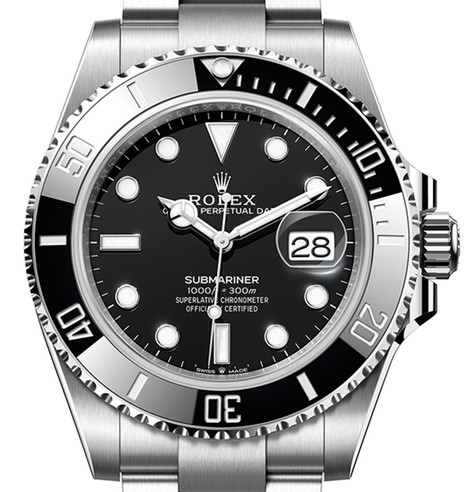
(…and these guys are the worst, which is why I’ll never own a Rolex, because I’m not going to play their stupid game.)

Oh, and by the way:  the actual purchase price of these items is only the first lightning-strike on the wallet.  Then comes the (mandatory) servicing, the parts replacement, etc. etc. etc…. see how the insurance companies play ducks and drakes with your premiums.

Oh, and by the way, car manufacturers like Ferrari are equally guilty of the same kind of practices (which you’ll also learn from Cars & Money;  watch out for the word “allocation”).


…and Porsche is just as bad.

If a fool and his money are soon parted, then the duration of “soon” is shrinking faster than a cheap Chinese cotton T-shirt in the clothes dryer.

And when baubles like watches and performance sports cars start becoming investment assets, the Finance Fucks in companies like Rolex are going to start making marketing decisions (pro tip:  they already are).

It’s the utter cynicism of the whole business which gets up my nose.  My only consolation is that the fools who’re being thus led around by the nose are the super-wealthy who can afford to pay those bullshit prices.  And I have absolutely no sympathy for them.

Strategy Change

Well, why not?

A majority of idiots in Gen Z have moved money out of investments and into a sports betting account. Twenty-six percent of Gen Z say “they treat sports betting as a deliberate, ongoing component of their financial plans,” according to a Bloomberg report.

Nothing like “fair and balanced reporting”, is there?  (I know, it’s Breitbart and not Fox News, but you get my drift.)

That 26 percent compares to 14 percent of Millennials, just six percent of Generation X, and one percent of Boomers.

“Sports betting is increasingly competing with traditional investing for younger Americans’ attention,” adds Bloomberg, “with more than a quarter of Gen Z investors saying they see gambling on sports as part of their long-term financial strategy.”

Gambling as a “long-term strategy.” The stupid; it hurts.

But let’s look at this whole thing from another angle.

The thing about sports betting is that if you take it seriously and look at the stats (as opposed to picking a horse because its name reminds you of yer Mum), there’s little difference between that and, say, playing the stock market.  Oh wait, those are serious investment vehicles. [eyecross]

And let’s be honest:  how many times have you seen one of those silly games where darts thrown into a random chart of stocks have yielded better results than those picked by analysts?  (I would love to see some kind of comparison of long-term results from the darts vs. the analysts, played each day, week or month over a twenty-five year period.)

Pro tip:  it’s all gambling.  Whether it’s a horse crossing the line first (at 27-1 odds) or GlobalMegaCorp Inc.’s share price doubling over the next six months, who can say?  Even better:  who’s not going to make money over the result of the next Dallas Cowboys game by picking the other team?

The only way people are going to consistently lose money on sports betting is when they start playing the minutiae:  points spreads, yardages, number of times Caitlin Clark is going to draw a flagrant foul for the rest of the WNBA season, etc.  (In the stock market, those kinds of  bets  I mean investments are called “puts”, and while the rewards can be astonishing, mostly it’s just the old “dropping dollars down a drain” situation.)

Rule of thumb:  the more complex the bet, the more likely you’re going to lose.

But I digress.  I have no problem with a small segment of Da Yoot trying a different way to increase their moolah.  I’m more interested in why they’re doing it, but not that interested, any more than I’m interested in why people still go to casinos, or why they bet on which raindrop reaches the bottom of the windowpane first.

Or whether Whizzbang Technologies’ IPO will yield 45% growth of stock value on the first day’s call.


I should point out that in my own yoot, I once got suckered into a golf game called “Yardbucks”, in which each yard of the golf course was worth a yard:  lose a 375-yard hole, and you’re down $375.  (There are typically more than 6,000 yards in an average golf course.)

I ended up losing only $15, and I only managed to lose that little because I won the last hole, a par-five 568-yard monster by fluking a 15-yard putt.

More to the point, I think I sweated out well over a gallon in those four hours,  and I’m pretty sure I did lasting damage to my heart.  I’ve never gambled on golf, or any other sport since.

Finding Space

Apparently there’s this foolishness emanating from the BritGov and its new (Marxist) Prone Monster:

Andy Burnham’s review into the prisons early release scheme will be conducted in the “coming days and weeks” and decisions need to be made “very quickly”, a Labour minister has said.

Under the new Sentencing Act set to come into force in September, some 6,000 criminals were due to be released under the early prison release scheme, but the Prime Minister on Thursday paused the plans and ordered an urgent review.

That’s because among the 6,000 would-be releasees are a pair of cop-killers — and needless to say, this eventuality has created a serious stir, even among the normally-passive Brits.

Under changes in the Sentencing Act, some offenders were set to be let out of prison after serving a third of their sentence, rather than half, in a bid to ease prison overcrowding.

Hell, I have a problem with that “half”, let alone a third because the Brits have appallingly-low sentences for serious crimes to start off with.  When attempted murder gets seven years (I watched one such example on a TV documentary, a few nights back), that would mean his effective sentence is barely two years.  For attempting to kill someone — in the one I watched, he stabbed the victim fourteen times, and only a miracle saved the victim’s life.

Frankly, I’m not at all sympathetic towards the moans about “overcrowding”, particularly when I see how the folks in El Salvador handle their violent criminal population:

And if we all feel strongly about this — and I’m pretty sure we do — allow me to offer a solution to their overcrowding problem:

Now I know that many are against the death penalty, and for once I’m going to be a little sympathetic to their concerns.

So start off by hanging only the murderers who killed more than one victim, add those who were caught in the act of murdering — say, in a public place where there were lots of witnesses — and let’s throw in the child-murderers for good measure.

Not only will the overcrowding problem be eased, but I’m willing to bet that would-be murderers may start to think twice before pulling out the kitchen knives and what have you, and the crime rate will start to drop.

It’s worth a try, because nothing else the BritGov has tried or even suggested has worked.

All this, of course, because the same BritGov — of whatever party — spends more money on cossetting illegal immigrants than on building new prisons in, say, the Outer Hebrides where there’s lots of space and a climate guaranteed to chill [sic]  all thoughts of mayhem from prospective criminals.

It’s just a question of priorities, really.